
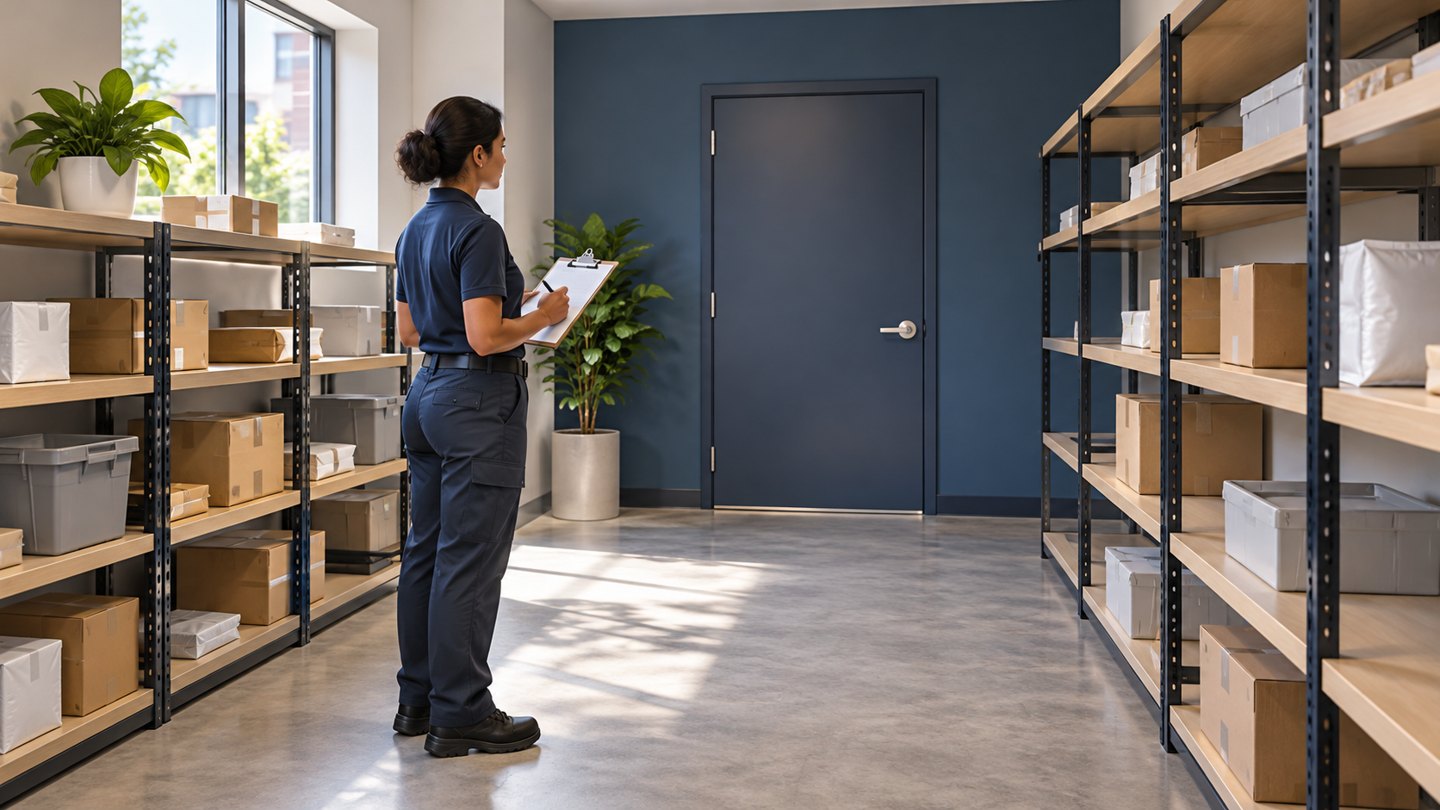
A spare room needs an operating agreement
An available room can still be a poor temporary package room. Someone may need it for evening meetings. The only staff member with a key may finish before pickups end. A shelf may fit inside while the cart cannot turn through the doorway. These problems are easiest to resolve before the first parcel leaves its current position.
This checklist supports a planned, on-property renovation move of ordinary parcels. It evaluates whether the destination can be accepted for the proposed use. It does not design a permanent mailroom, approve construction work or address hazardous materials, emergency evacuation or postal address changes. Start with the physical relocation runbook for the overall decision sequence.

Define what the temporary room must support
List the functions intended for the space. Storage-only accommodation differs from a room where staff accept deliveries, answer residents and perform pickups. Keeping the service counter elsewhere can reduce public traffic, but it creates a retrieval journey that needs staffing and an approved route.
Write a short use agreement with the property decision-maker: start date, expected end condition, operating hours, permitted parcel categories, responsible team and other users of the room. Include what happens if renovation runs longer than expected. A calendar booking that expires before the project does is a known dependency, not a detail to discover later.
Check competing uses explicitly
Ask about cleaning, maintenance, meetings, contractor staging and scheduled inspections. Establish how those activities will be coordinated without leaving inventory unattended or giving unrelated visitors access to parcel labels and records. If two uses cannot coexist under the approved arrangement, choose a different space or change the schedule before accepting it.
Test the route with the intended operation
Walk from the current room to the destination, and separately from the staffed service point to the destination. Include the doors, turns, lifts and controlled areas that staff will actually use. Check the expected hours and any construction-related route restrictions with the responsible facilities lead.
Use an empty cart or other approved test setup before handling live parcels. A route that works for a person walking alone may not work for the planned equipment. Ask who resolves a route change during the move and where a batch remains under control if it cannot depart. Do not improvise a storage stop in a corridor.
OSHA’s materials-handling standard addresses safe clearance where handling equipment is used and stable storage. The site’s qualified personnel should assess those matters for the actual route and shelving; a successful walk-through is not a compliance certification.

Check storage under working conditions
Assess usable positions after allowing for the proposed operation, rather than counting every flat surface. Can staff identify and retrieve an item without moving unrelated stock? Is there an approved position for a parcel awaiting clarification? Will receiving a batch leave enough room for the receiver to check it before placement?
Do not introduce new handling categories merely because the old room had more space. If an item falls outside the temporary setup’s approved limits, resolve its handling separately. Avoid using renovation materials, cleaning supplies or contractor equipment as makeshift shelving.
The existing location-naming guide covers consistent identifiers. Here, test whether a colleague can use the chosen references in the actual temporary room. A correct label on an unusable position does not make that position available.

Hand over access without handing over secrets
Confirm which authorized staff need entry, who provides it through the property’s approved process and how covering staff will obtain permitted access. Test entry and securing the room with the staff who will work the relevant shift. Do not assume that having access to the original package room grants access to the temporary one.
Keep credentials, key details and internal access instructions in approved restricted channels. The public notice should direct visitors to a staffed service point, not explain how to enter storage. The wayfinding and notice guide shows that distinction.
Review any access granted specifically for the temporary operation when it closes. That review belongs with the property’s authorized access administrator. Do not share a general door code widely because the arrangement is expected to last only a few days.
Use a handover sheet with evidence and owners
The following is an original checklist template. Record observed facts, the person who confirmed them and any remaining action. “Pending” should name a decision, not merely express optimism.
- Use and duration: space accepted by the responsible manager; conflicting reservations resolved; extension decision assigned.
- Route: intended equipment and operating hours considered; route owner and change contact identified.
- Storage: approved positions identified; receiving and retrieval can occur without improvised piles.
- Access: assigned staff can enter and secure the room through the approved process.
- Workstation: authorized devices, connection and record access tested where the work will occur.
- Service: intake point, pickup point and retrieval responsibility agreed.
- Open conditions: each unresolved issue has an owner and a clear effect on whether movement may start.
- Acceptance: accepting manager, date, time, restrictions and review trigger recorded.
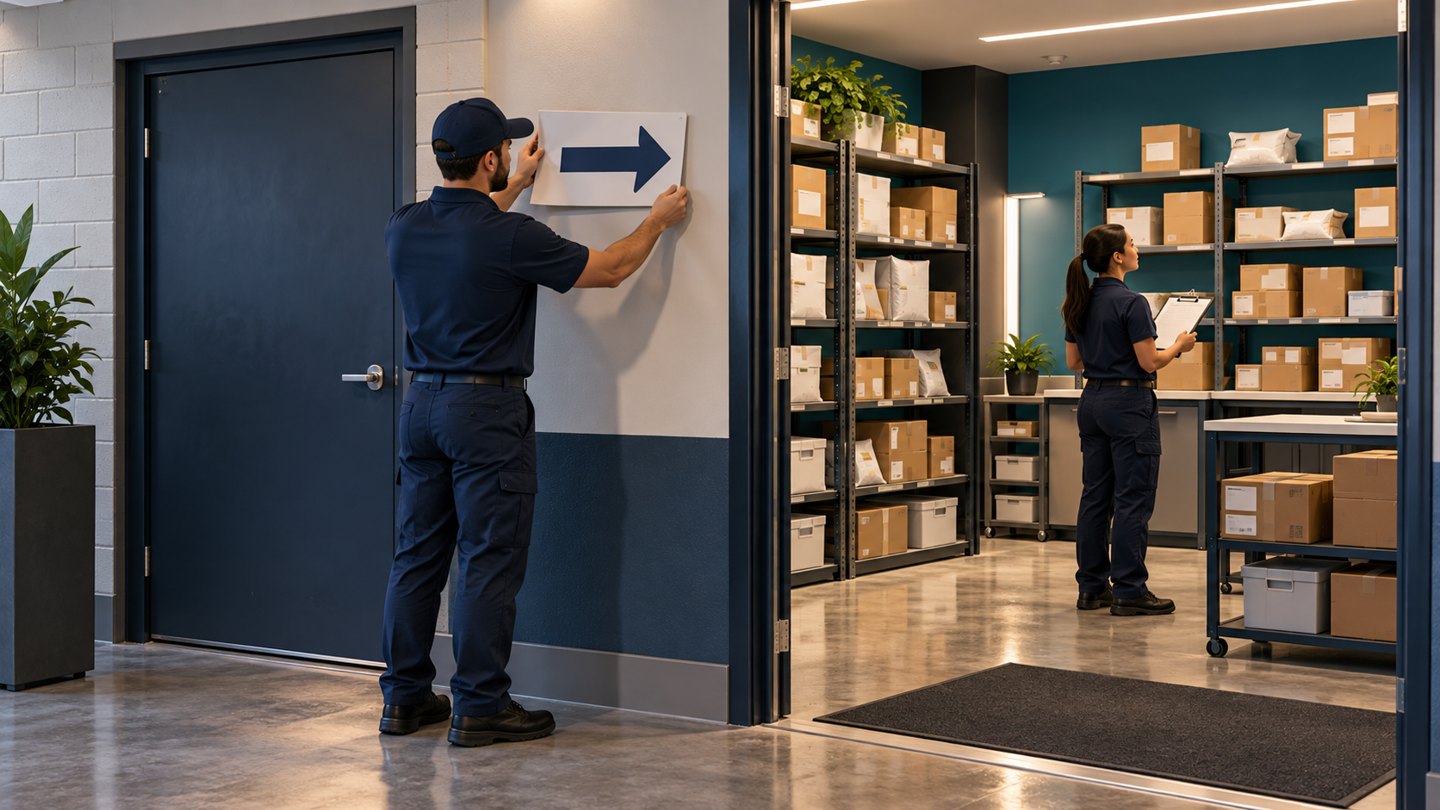
A fictional room that fails its first review
Fictional Linden House proposes using a training room for ten days. During the readiness check, staff find three issues: an evening class still has a reservation, the late-shift colleague cannot enter using the approved access process, and the proposed pickup queue would cross the room’s receiving area.
The manager resolves the reservation with the room owner, asks the access administrator to arrange and test authorized staff entry, and keeps pickups at reception with a designated retriever. The accepting manager records that the room is storage-only. It is not opened to residents or carriers.
The destination is accepted only after those changes are checked. If the late-shift access test had remained unresolved, staff would have kept the move pending rather than relying on another colleague to stay late indefinitely. The example demonstrates a readiness decision, not a universal requirement for staffing or room design.
Make the first receipt prove the arrangement
Receive one bounded batch using the movement receipt process, then confirm that the placement references work from the service desk. If retrieval or receiving fails, resolve that operational gap before sending more parcels. TrackNest supports package tracking; confirm how the existing setup records temporary locations without assuming new permissions, offline operation or relocation automation.
Retain the accepted handover conditions until the temporary room is formally closed. A changed route, room reservation or access arrangement should trigger another review of the affected condition, not a silent departure from the plan.