

A guest arrives before check-in with two suitcases and a tote. Another has checked out but will return after dinner. A conference group wants to collect half its bags now and the rest later. All three requests sound like “Can you hold our luggage?” Yet each creates a different return decision for the next person at the desk.
A useful hotel luggage-storage process connects five things: who asked for the service, which bags were accepted, where each bag is now, who may collect it and what actually happened at release. This guide covers luggage deliberately accepted for short-term storage. A bag discovered without a known handoff belongs in a separate found-property or safety process; it should not be quietly entered as a normal guest drop-off.
1. Agree the service before taking custody
Start with the property’s actual service boundary. Who can use storage? During which hours can someone collect? Where is the approved capacity? Who decides an exception when the room is full or a request falls outside the usual window? Staff should not have to invent these answers while a guest is holding out a bag.
Ask for an expected collection time and a practical way to reconnect using the property’s approved contact process. An estimate is useful for staffing and follow-up; it is not a promise that the guest will return at that minute. Explain any closing-time constraint before accepting the luggage. Do not accept an impossible pickup arrangement and leave the night shift to resolve it.
- Identify whether the guest will collect personally or whether another named person may collect.
- Confirm how many separate pieces are being accepted, including backpacks and loose items.
- Explain the claim-reference method and what to do if the ticket is lost.
- Refer unusual items, unsafe handling requests and policy exceptions to the responsible person before acceptance.
Keep statements about storage conditions and responsibility accurate. Staff should use the property’s approved wording rather than improvise liability waivers or promise that a room is theft-proof.
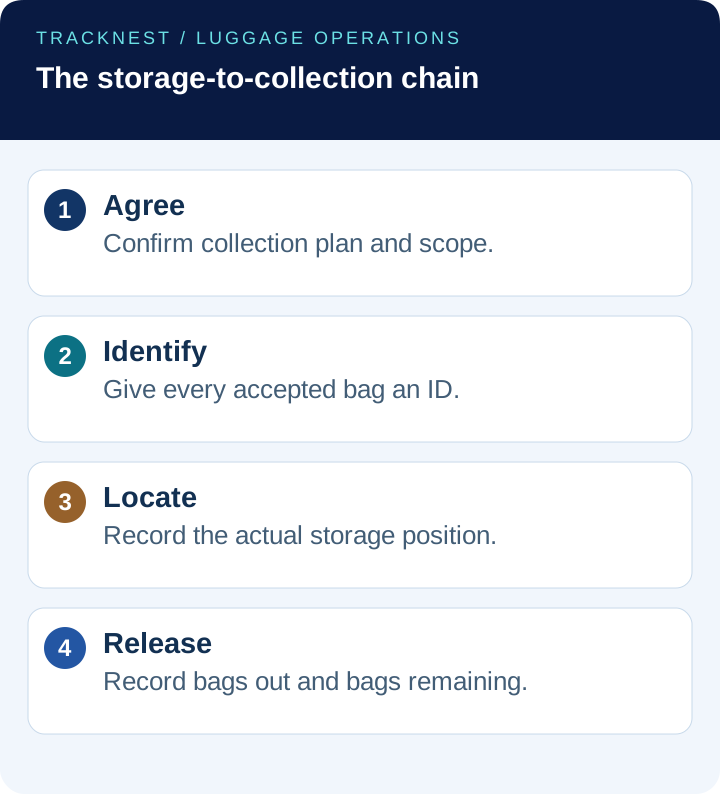
2. Count the pieces with the guest, then tag them
Count together before luggage moves behind the counter. A group reference alone is not enough when pieces can separate. Connect a unique bag identifier to the shared storage reference, then give the guest a matching claim reference. A three-piece deposit might use one reference and three related bag IDs; this is an example of a recording method, not a mandatory numbering format.
The key is an unambiguous relationship. If a tote is strapped to a suitcase, agree whether it is being accepted as a separate piece. If it may detach, treating it as a separately identifiable piece avoids a later argument about whether “two bags” included it. Never attach a tag in a way that damages a handle or makes safe handling harder.
A useful intake record includes the accepted count, a brief external description, acceptance time, staff identifier, location and collection plan. Record existing visible damage factually if property policy calls for it. Do not open the luggage to inventory belongings. The intake and tagging checklist explains how to catch count and tag errors before the guest leaves.
3. Store for a reliable retrieval, not just an empty floor
Assign the real storage position after placement. A planned position is not a completed movement. If another employee moves a bag, update that same record so the next shift does not search both locations or assume the case has already been collected. For a multi-bag deposit, record separate positions when the set cannot stay together.
Make capacity a decision about usable, safe space. A clear aisle or exit is not spare luggage capacity. For U.S. workplaces covered by OSHA, exit routes must remain unobstructed even temporarily. Stable placement, clear access and suitable handling equipment matter more than fitting one more suitcase into an already crowded room.
If the normal space is full, use only an approved alternative with an assigned custodian and recordable location. Otherwise, pause new acceptance and ask the designated manager to resolve the request. The luggage-room layout and retrieval guide develops the location, capacity and movement checks.
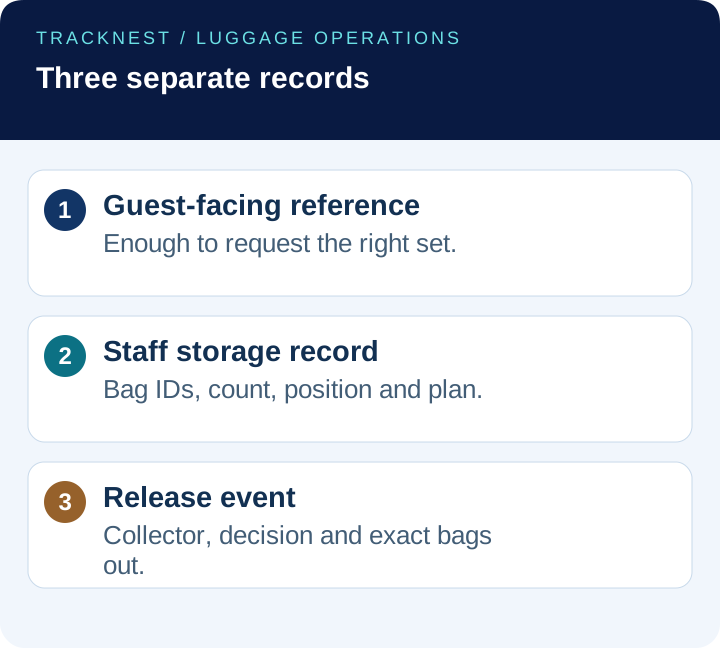
4. Verify the request before retrieving the bags
Begin with the guest’s claim reference and the existing record. Check which items are being requested and who is collecting them. A familiar face, room number or vague description alone can create a plausible but incomplete claim. Use the property’s approved verification steps; do not announce another guest’s name or show a screen of open storage records to someone browsing for a match.
A lost ticket is an exception that deserves a calm pause, not an automatic refusal or immediate release. Gather the claimant’s account before revealing distinctive details, compare it with the intake record and escalate when the evidence is insufficient. The missing-ticket verification process gives staff a structured way to document that decision without routinely copying identity documents.
For group storage, the depositor, organizer and collector may be different people. Make the authorized collection scope explicit. A person authorized to collect their own suitcase is not automatically authorized to empty the group’s entire storage set. Use the group and split-pickup workflow when collection will happen in stages.
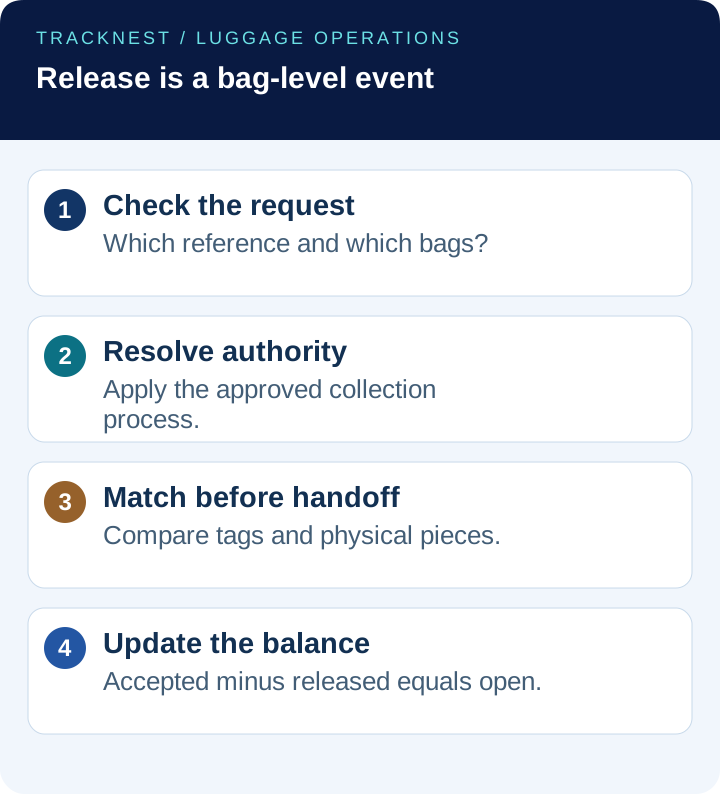
5. Close the handoff only after the physical collection
Bring the selected bags to the approved handoff area and compare identifiers with the release record. Confirm the count with the collector. Record completion when the transfer has actually happened, not when someone begins walking toward the storage room. If the person changes their mind or leaves before collection, keep the bags open and correct any premature status change.
For partial pickups, log the exact bags released and the remaining bag IDs and positions. “Guest collected luggage” is too vague when one case stays overnight. A replacement claim reference, if used, should point to the remaining set and make the earlier reference’s treatment clear under property policy.
6. Make exceptions visible at shift change
Reconcile the open list with the physical luggage that remains. Separate a late pickup from a missing bag, a wrong location and an undocumented release; each needs a different next action. The overdue-luggage reconciliation guide shows how to hand off the owner, action and next review point for every unresolved record.
An expected collection time passing does not by itself establish abandonment or permission to dispose of property. Retention, contact and final disposition depend on the property’s approved policy and applicable requirements. A suspicious bag or suspicious circumstances require a separate safety response. Stop normal handling, keep people away and follow the property’s emergency procedure and responder instructions.
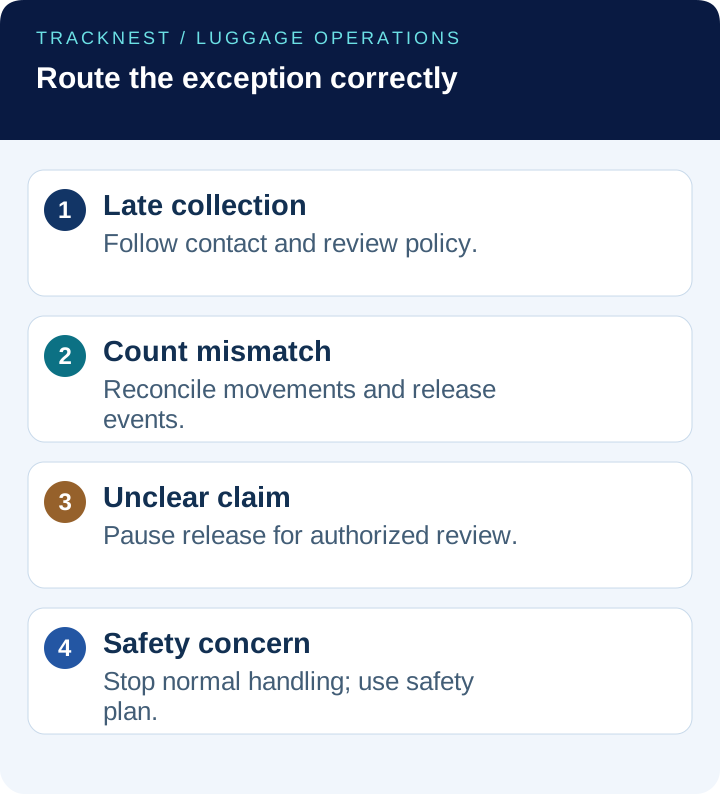
Start with a small, observable trial
Choose one shift and use the same intake and release checks for every accepted set. At handoff, ask where staff had to guess: count, location, collection authority or status. Adjust the form or instructions around those gaps. Do not promise a percentage improvement before you have measured your own operation.
A paper process can use these controls; a digital record can make them easier to share if the tool supports your needs. TrackNest’s lost-and-found overview and front-desk guides describe the site’s broader operational approach. Confirm any luggage-specific fields, permissions or workflows in a demo rather than assume they exist.
Sources and scope
Privacy guidance: FTC business guidance on protecting personal information. U.S. safety requirements: OSHA exit-route requirements and OSHA materials-storage requirements. Safety escalation context: CISA guidance on unattended and suspicious items. These sources support the limited privacy and safety statements above; the luggage workflow itself is an operational recommendation.
Source review: October 15, 2026. The workflow, sample records and decision checks in this article are editorial recommendations for adapting to property policy. They are not a legal opinion, a universal hotel rule or a description of a particular software feature.