

A group’s luggage rarely leaves as neatly as it arrived. One traveler collects a laptop bag, two people take a taxi early and the organizer returns for the remaining cases after an event. If the desk records only “group collected,” it can close a six-bag deposit after handing over two pieces.
The reliable unit is the individual bag and its release event. A shared group reference can organize the set, but it should not erase different collection permissions or departure times. This guide expands the split-collection stage of the hotel luggage-storage workflow.
Set collection authority before the first bag goes into storage
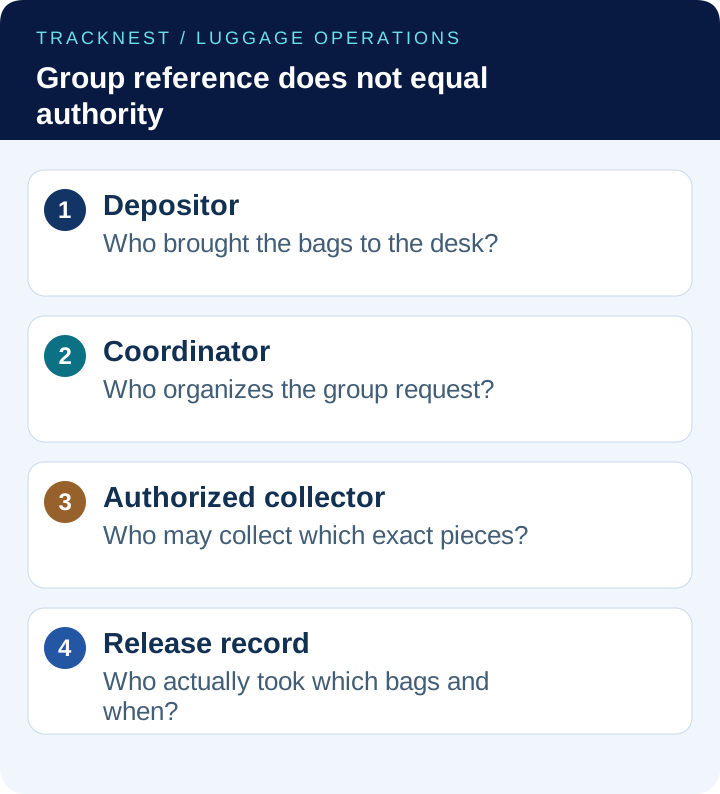
Ask how the group intends to collect. Will one designated person collect all pieces, or will travelers collect only their own bags? Does the property’s process permit another person to be authorized later? Clarify the scope through the approved procedure rather than treating “tour leader,” “conference organizer” or “family member” as automatic authority.
A coordinator can help organize the deposit without being authorized to collect everything. A guest can also be authorized for a defined subset. Write the distinction in a way the next shift can act on. “Alex may collect bags G-02 and G-03 under the approved authorization” is operationally clearer than “Alex is with the group.” These identifiers are an invented example, not a real guest record.
Do not put the group’s travel itinerary or everyone’s contact details on visible bag tags. Collect only what the storage and collection process requires, and keep that information accessible to the staff who need it.
Keep a bag-level list under the shared reference
Count with the group and identify every accepted piece. If the group deposits six bags, the record should contain six distinct identifiers, not merely one tag on a cart. A single cart may be useful for transport, but the bags can separate as soon as the first person leaves early.
Use the intake and tagging checklist to record the set. Add a bag-to-collector relationship only where the agreed collection plan needs it. Avoid turning the luggage log into a passenger manifest. Names or references should be limited to the legitimate task, and any identity check should follow the property’s policy.
If the set occupies several storage positions, record each position with the relevant bag IDs. Staff should not have to retrieve every group bag to find one traveler’s case. The storage and retrieval layout explains how to keep the location current when pieces move.
Use a running balance with an item list behind it
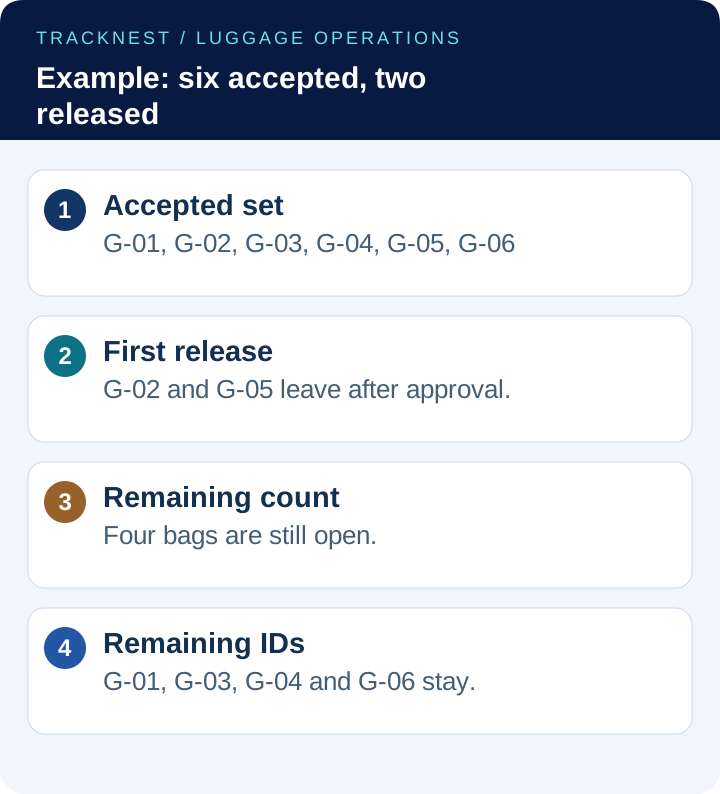
A remaining count is a quick warning signal, but it is not enough by itself. Six accepted minus two released leaves four open. Staff still need to know which four. Record each release against the bag IDs so a later employee can distinguish a correctly remaining case from one that should already be gone.
Here is an invented training example. A set begins with G-01 through G-06. The first approved pickup releases G-02 and G-05. The record should show four remaining: G-01, G-03, G-04 and G-06, with their current positions. If the physical room contains a different set of four, the arithmetic alone would miss the error.
Process each pickup as its own completed event
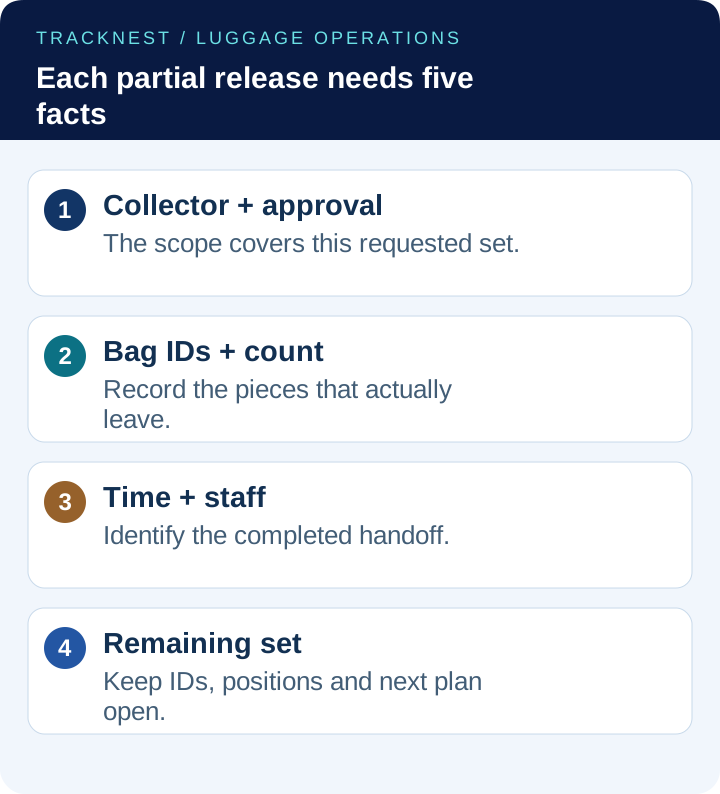
Identify the requested subset before staff enter storage. Verify that the collector’s approved scope covers those bags, retrieve the matching identifiers and confirm the count at handoff. Record the transfer only when the bags actually leave staff custody. If a guest requests two pieces but takes one, record one.
Do not issue a vague “collected” status for the whole group. Use the process’s equivalent of a partial release and preserve the open remainder. If the tool cannot represent partial collection clearly, the property needs a documented method that can; do not assume a product has that feature because it supports package pickup.
- Collection time and the staff member completing the handoff.
- The approved collector reference and relevant verification outcome.
- The precise bag IDs released in that event.
- The remaining bag IDs, count and locations.
- Any changed expected pickup time for the remaining set.
Handle changed plans without overwriting the history
A group may decide that a different person will collect the remainder. Use the property’s approved authorization process and record the change with its time and scope. Do not replace the earlier collector’s name in a way that makes it look as if the new person performed past pickups. The change governs the remaining bags; the completed release events should stay accurate.
If a person presents an earlier ticket after some bags have been released, the open record should explain what remains. If the ticket is missing or the person’s authority is unclear, use the missing-ticket verification process. A plausible group relationship is not a reason to skip the exception.
Keep guests informed about the remaining collection window without exposing other travelers’ information. An organizer may need the count and next step, but not every individual’s phone number or identity-check details.
Close the group only after a physical and recorded check
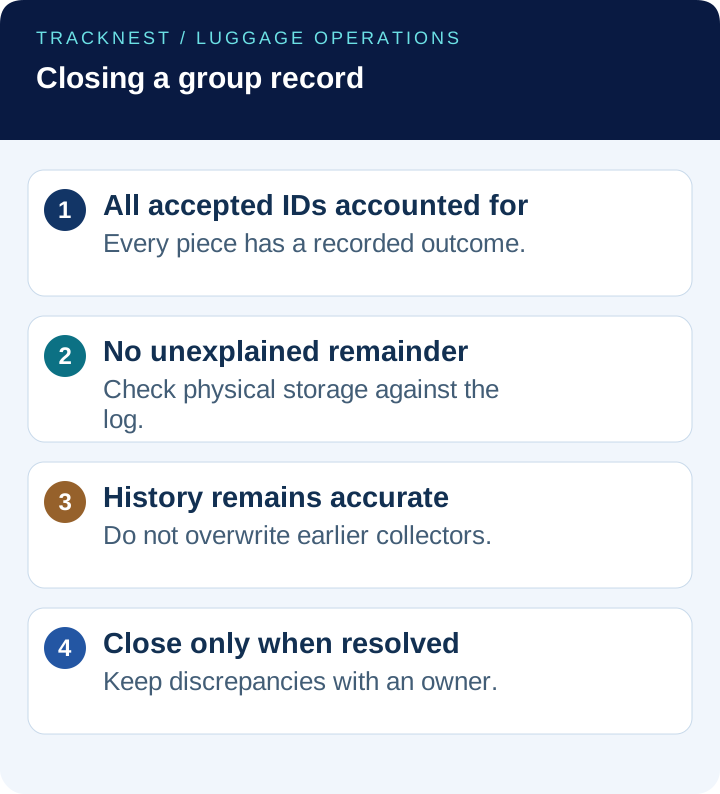
A zero balance should mean that the release history accounts for every accepted bag and no bag in the group remains in storage. If the record says zero and a tagged case is still present, investigate the mismatch. Do not remove the tag or create a new unrelated record to make the numbers appear tidy.
At shift change, pass the remaining set to the next employee with its collection plan and unresolved issues. The overdue-luggage reconciliation guide applies when expected collection passes or the physical count and record disagree.
Sources and scope
FTC business guidance on protecting personal information supports limiting personal information and access to the business purpose. The role distinctions, item-level releases and six-bag example are editorial workflow recommendations, not a legal determination of collection authority.
Source review: October 15, 2026. The workflow, sample records and decision checks in this article are editorial recommendations for adapting to property policy. They are not a legal opinion, a universal hotel rule or a description of a particular software feature.