
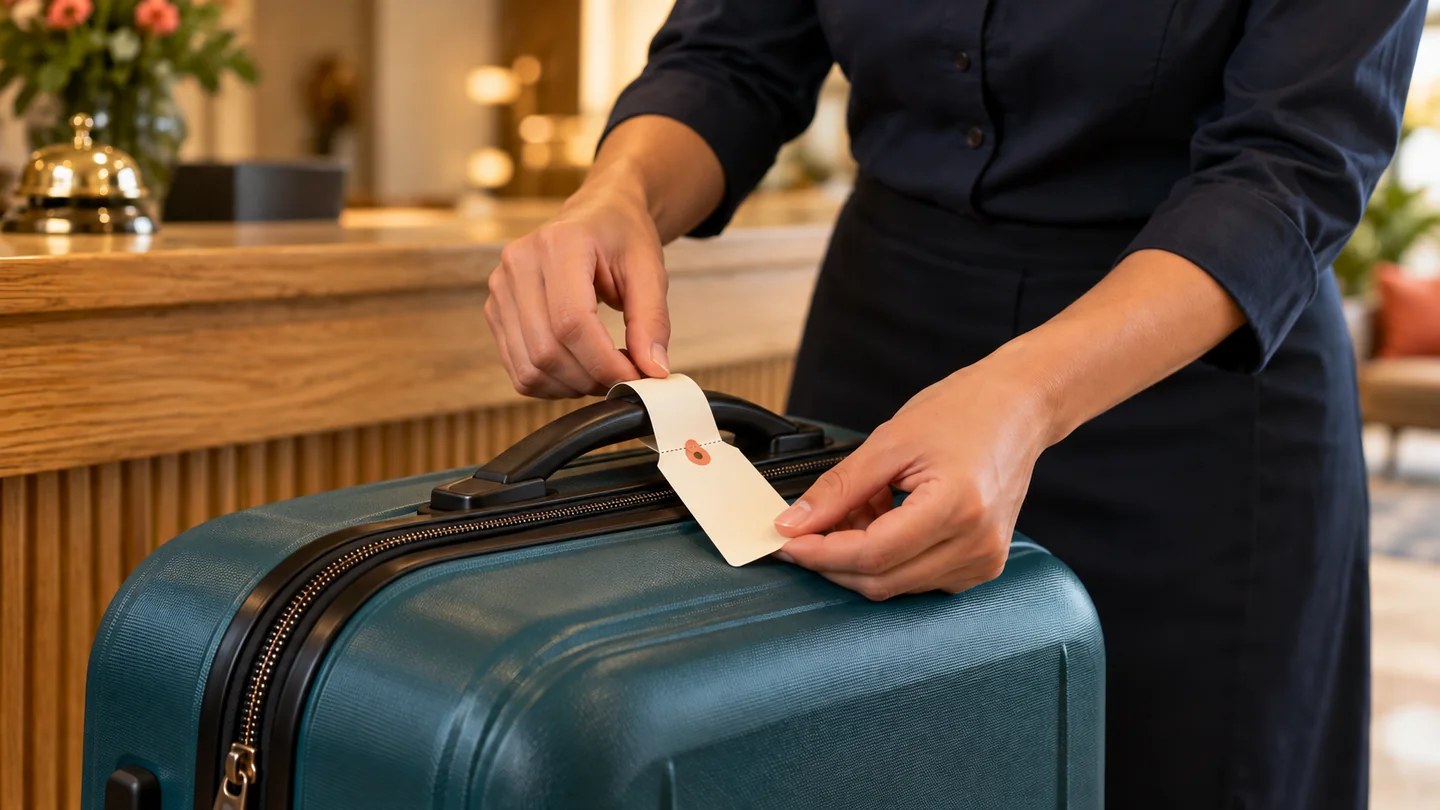
Luggage errors often begin before the bags reach storage. A guest says “three bags,” an employee sees two suitcases, and a tote tucked behind a handle never gets its own identifier. The next shift has a plausible count and an incomplete record. A better intake ends with the guest and staff agreeing on the same physical set.
This checklist is for hotel luggage intentionally accepted for short-term storage. It expands the intake stage of the hotel luggage-storage workflow. It does not cover searching found luggage or deciding ownership of an unidentified bag.
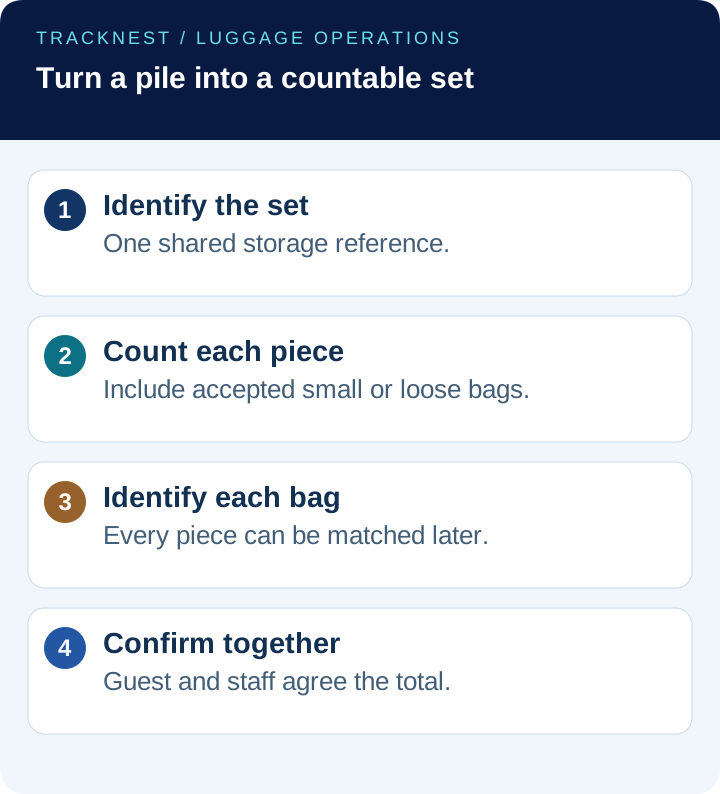
Count the physical pieces before writing the total
Ask the guest to place the intended pieces in the approved intake area, keeping the public path clear. Count them together. Include small bags that will be stored separately and items clipped to larger cases if they could detach. Explain any item the property cannot accept before taking the rest into storage.
Do not silently reinterpret “a suitcase with a backpack” as one or two items. Agree the recording convention with the guest and apply it consistently. If a stroller, mobility-related item or unusually shaped case requires a different approved handling route, use that route; do not force it into the normal shelf process.
- Point to each piece and state the agreed total.
- Check whether an attached piece can separate during storage or collection.
- Assign each accepted physical piece its own identifier.
- Repeat the total when giving the claim reference to the guest.
Use matching references without putting guest details on display
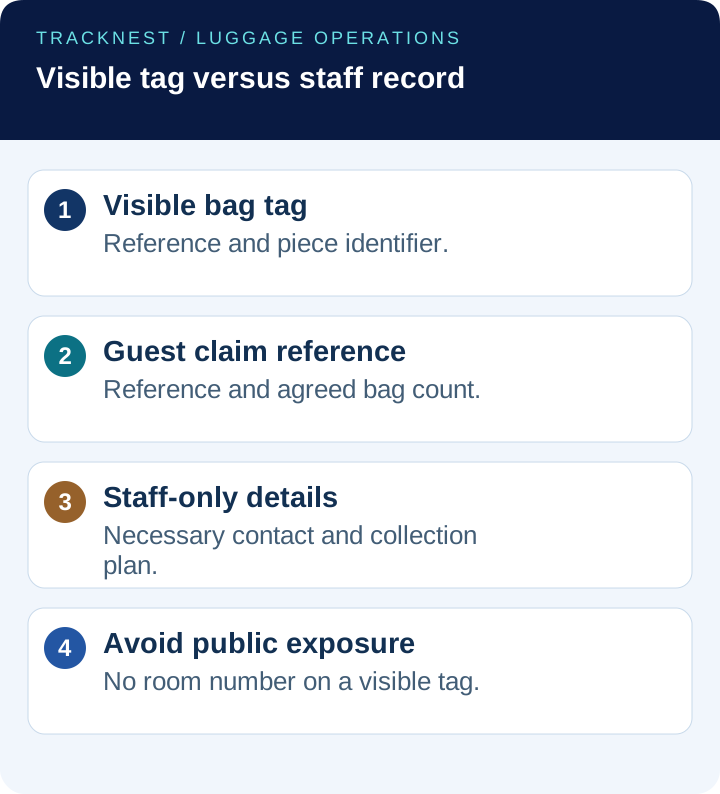
A tag needs to connect a bag to its record. It does not need to advertise a guest’s name, room number, phone number or travel plans to everyone who passes the counter. Use a non-descriptive reference on the visible tag and keep necessary identifying information in the staff-accessible record.
Matching two-part tags are one option. If the process uses separate printed labels and a receipt, verify the relationship before attachment. A label from the previous transaction can look perfectly professional while linking the case to the wrong guest. Read the reference, compare it with the active record and attach it to the intended piece before starting the next deposit.
Do not rely on color as the only identifier. Similar colors, worn tags and low light make that fragile. A readable written identifier should carry the meaning; color may be an extra cue. Keep spare unused tags separate from the active set so they are not mistaken for accepted bags.
Write an external description that can distinguish the bag
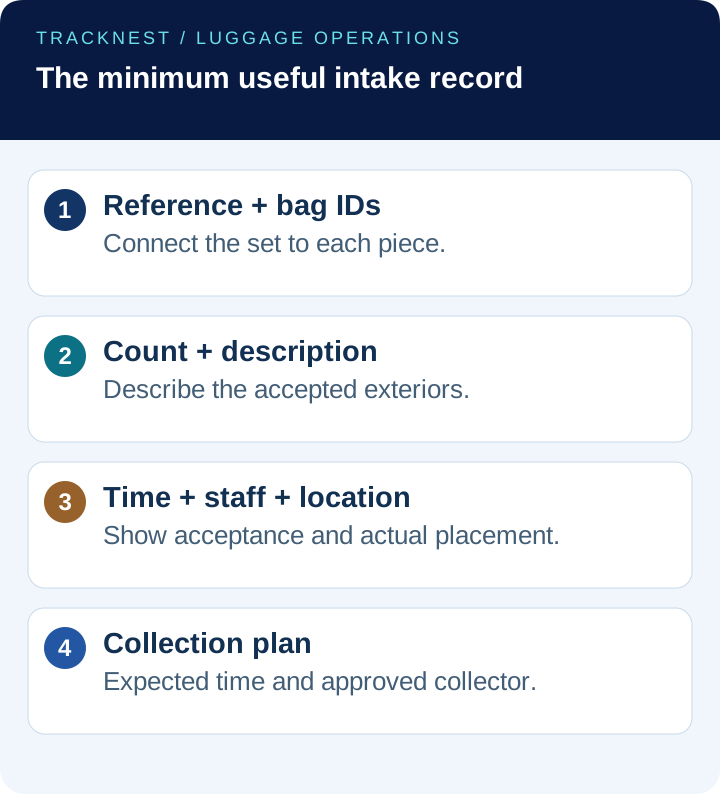
“Black suitcase” may describe half the storage room. Add a concise external distinction that staff can see without opening it: hard-shell or soft-sided, approximate size, a patterned strap or a particular visible mark. Descriptions supplement a bag identifier; they do not replace it.
If visible condition needs documenting under property policy, use factual language. “Front corner visibly scuffed at intake” describes an observation. “Guest damaged the bag” assigns a cause the employee may not know. Avoid collecting a catalog of contents or photographing personal documents. If a photograph is part of an approved process, frame only the necessary exterior and control access and retention.
The same restraint applies to guest information. Existing authorized guest references may be enough for routine storage. Do not create a second dossier just because a form has unused fields. FTC business guidance supports limiting collection to a legitimate business need, with an appropriate retention policy.
Finish placement before completing intake
After tagging, move the luggage to approved storage and record where it actually lands. A set that occupies two positions needs both positions listed. A bag temporarily waiting at the counter is not in the luggage room merely because that is the intended destination.
Use a handoff between employees if one person accepts and another stores. The storing employee confirms the identifiers and location; the accepting employee does not infer completion from seeing the cart roll away. If safe capacity is unavailable, follow the storage-capacity decision before accepting more bags.
Handle changes before the guest walks away
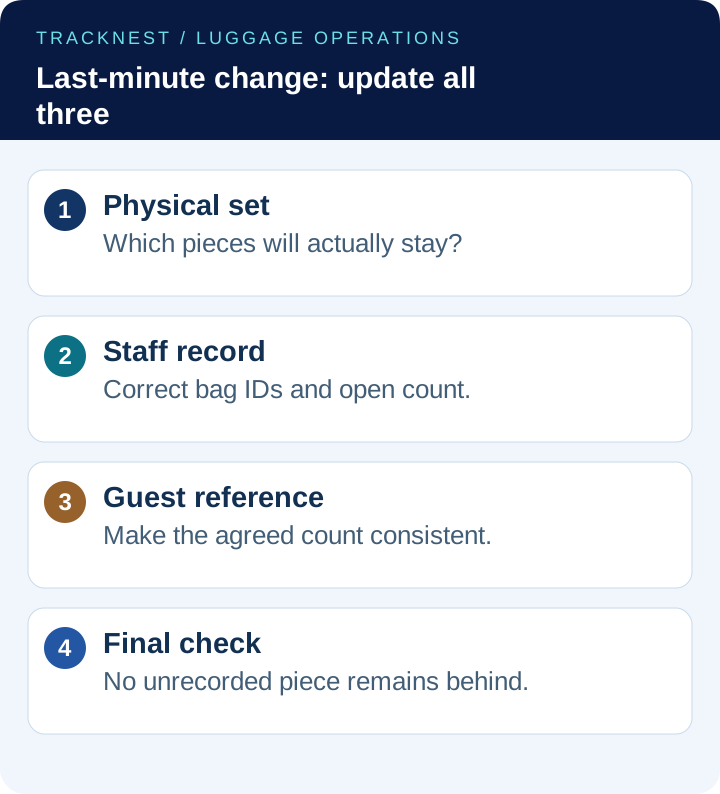
A guest may add a coat bag after the receipt is printed or decide to keep a backpack. Update the record and claim count immediately. A handwritten correction on only one side of the process creates two conflicting versions. Apply the same change to the stored set, the staff record and the guest-facing reference as needed.
If the tag tears off during intake, preserve the chain of reference rather than improvise a new unrelated number. Record the replacement according to policy, attach it to the confirmed bag and retire the unusable tag. If you cannot confidently reconnect a loose tag to a bag, stop and resolve it with the guest while they are still present.
A practical intake test for training
Use an invented practice set with two suitcases, one detachable tote and one bag the guest decides to keep. Ask a trainee to create the record, attach identifiers and explain what the next shift will see. The test is whether another employee can retrieve the correct accepted pieces without asking the trainee to remember details.
If collection authority is complicated, use the group split-pickup record before intake ends. If the claim ticket is later missing, move to the verification exception process instead of trying to reconstruct ownership from a tag alone.
Sources and scope
FTC business guidance on protecting personal information supports the data-minimization and retention principles. The tagging convention, external-description fields and training example are recommended operational controls, not requirements prescribed by the FTC.
Source review: October 15, 2026. The workflow, sample records and decision checks in this article are editorial recommendations for adapting to property policy. They are not a legal opinion, a universal hotel rule or a description of a particular software feature.