
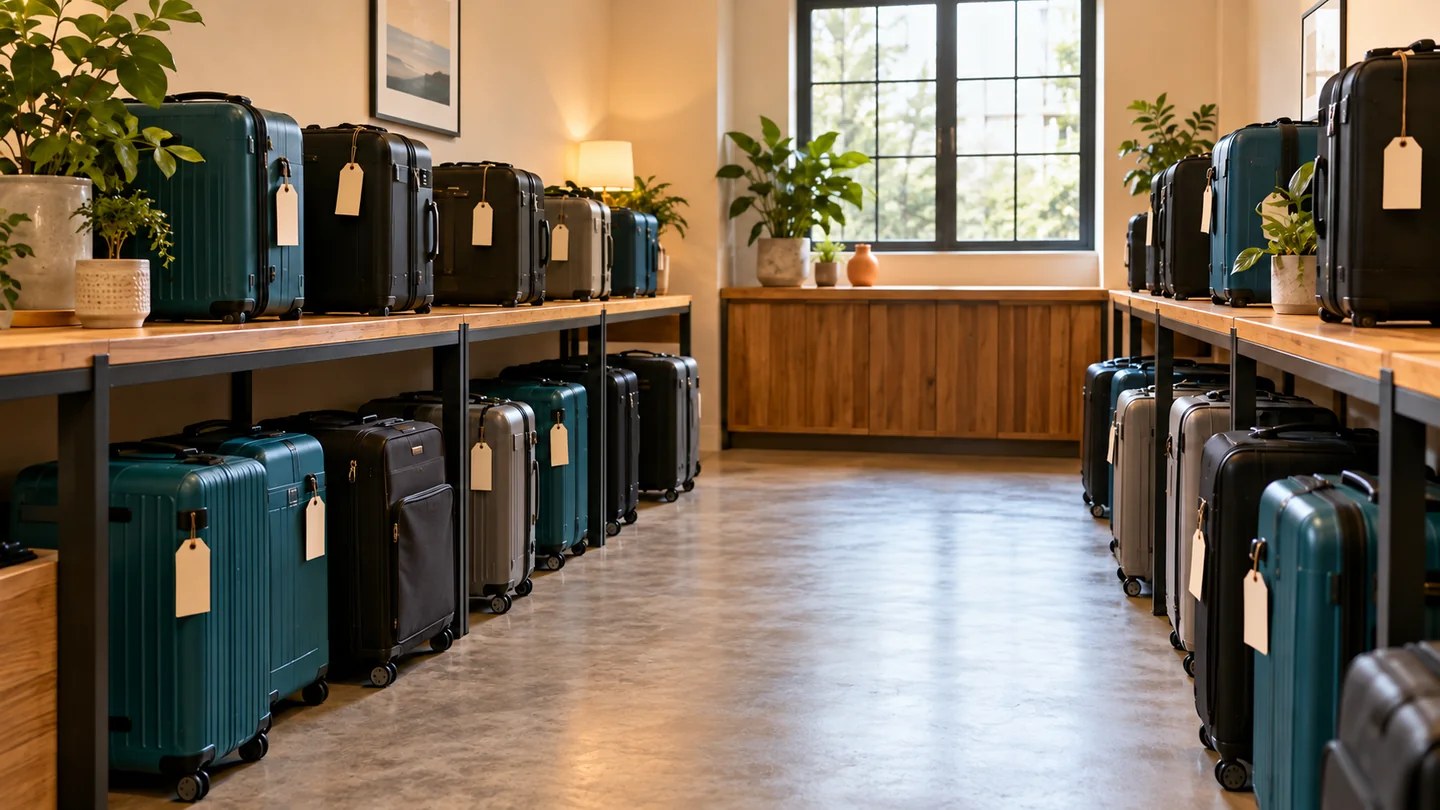
A luggage room is easy to fill and hard to retrieve from when the only location instruction is “in the back.” A useful layout lets an employee find a particular case, bring it to the counter safely and leave a record of any movement. Design around that retrieval task before treating every empty patch of floor as capacity.
This guide develops the storage stage of the hotel luggage-storage workflow. The zone names and record examples below are operational suggestions. Property-specific safety, accessibility, fire and building requirements still control the actual space.
Give every usable position a stable name
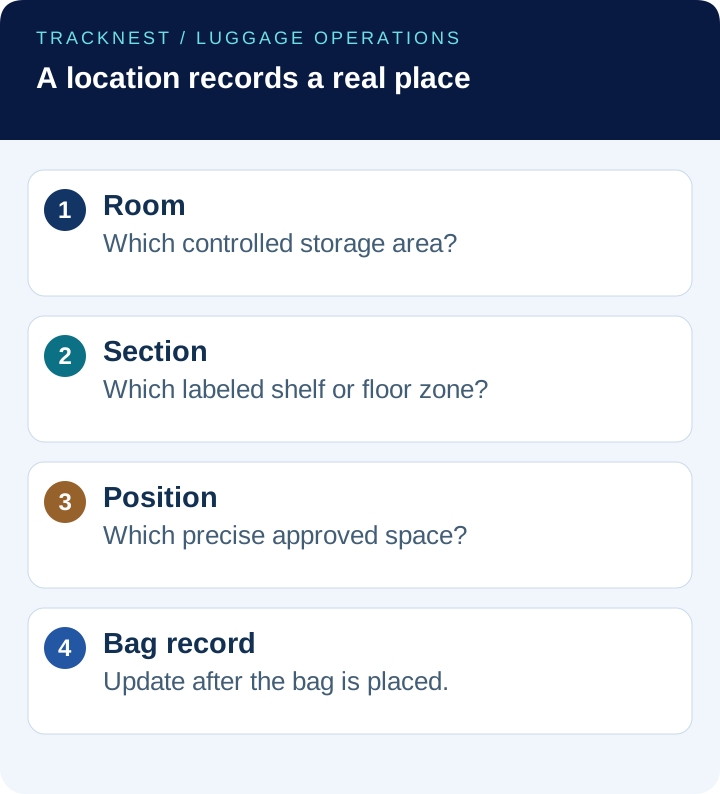
Choose location labels that someone can read at the room entrance and at the bag itself. A simple room–section–position scheme can work: for example, LUG-A-03. It should describe a physical place rather than a guest, shift or expected departure time. When the next shift arrives, the label should still mean the same thing.
Put the location in the bag’s record only after the bag is placed there. If several bags share a position, keep their individual identifiers visible. If one deposit must split across two positions, record both. Do not force the physical set together by stacking unstable cases just to preserve a tidy record.
- Separate approved storage positions from the public handoff area.
- Make temporary retrieval staging a defined place with an owner.
- Label approved alternative storage as clearly as the main room.
- Retire obsolete labels when a shelf or area is removed; do not let two places share a name.
Set the acceptance limit from safe usable space
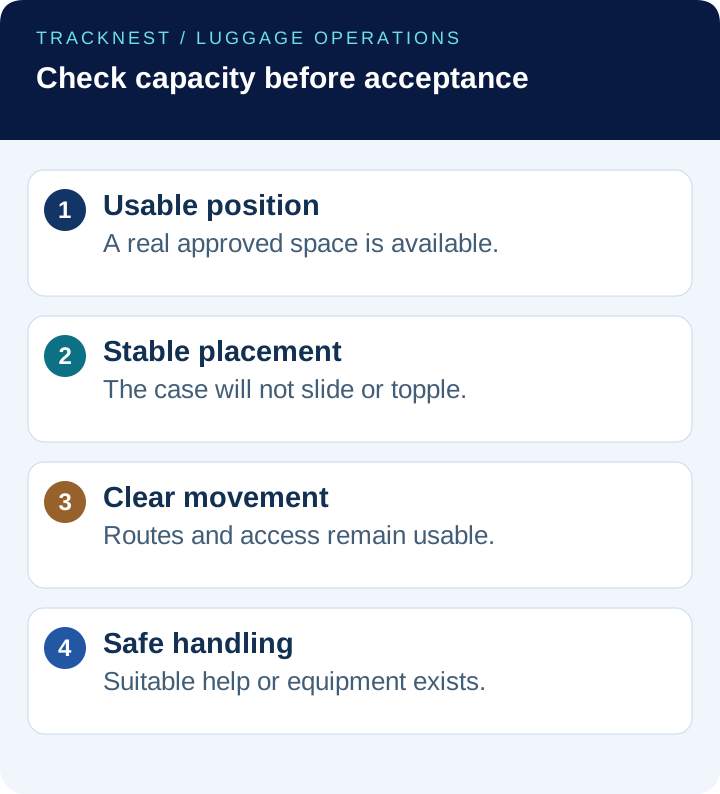
The count of empty shelf rectangles is not the same as available capacity. A large case may block the view of identifiers or force other bags into a route. A damaged shelf, wet floor or unavailable cart can temporarily reduce what the room can safely handle. Give staff a clear way to stop acceptance and ask for help when conditions change.
OSHA’s materials-storage requirements address hazardous and unstable storage and housekeeping. Apply the relevant requirements to the actual workplace, with competent facilities or safety input where needed. Do not invent a universal aisle width or maximum stack height for every hotel. Painted lines help communicate an approved layout; they do not establish compliance on their own.
Place heavy or awkward cases where staff can handle them using appropriate equipment and assistance. General OSHA materials-handling guidance supports matching equipment to the load and seeking help where needed. A guest saying “it’s light” does not override what the employee can safely grasp, move or see around.
Treat a move as a small handoff
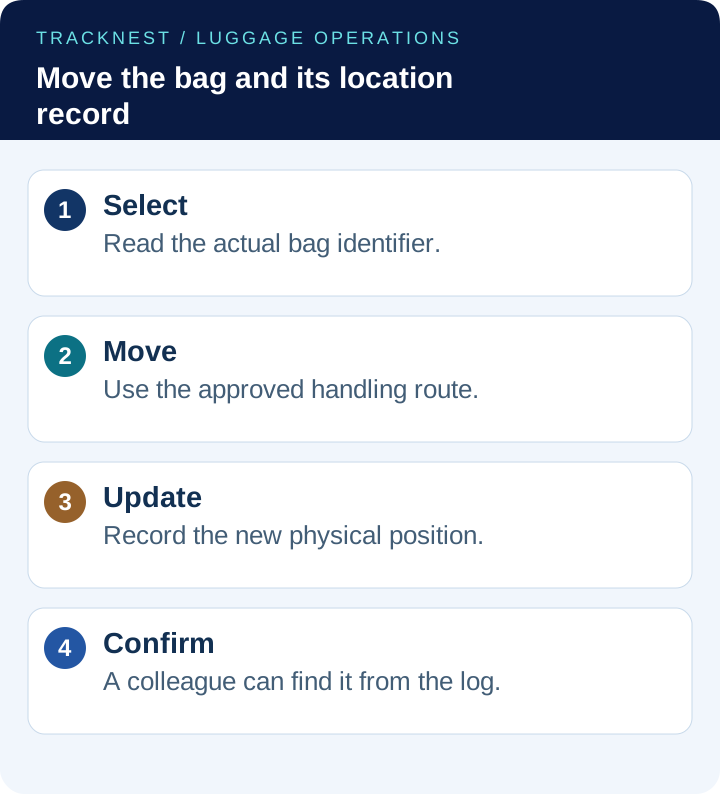
Moving a case to make room seems harmless until the original position becomes the only clue in the record. Use a short movement entry: bag identifier, previous position, new position, time and employee. Keep the current position easy to find while retaining the necessary movement history under policy.
If two employees work together, one can move and the other can confirm the updated position. The practical test is whether an uninvolved colleague could now retrieve the bag. Avoid informal messages such as “all the blue ones went upstairs” because color is not a reliable substitute for item-level identifiers.
Do not move luggage into a guest corridor, exit route or an unapproved staff space to make the main room appear organized. If an approved overflow area is used, define who controls access and who can retrieve from it. The desk should not promise immediate pickup if only one unavailable employee has the access needed.
Retrieve only the bags authorized for this collection
Start from the approved release request rather than pulling anything that resembles the guest’s description. Locate the exact bag IDs, compare their tags and count the requested pieces. If the record says two bags but the position holds three, resolve the difference before taking all three to the counter.
Bring selected bags to the approved handoff position and keep them under staff control until collection is completed. Do not leave several guests’ cases in an undifferentiated public pile. Keep the next pickup separate so a guest cannot accidentally take a similar suitcase while staff finish another transaction.
For a partial collection, confirm the position of what remains. The split-pickup guide explains why a set can be partly released while its storage record stays open. A missing ticket or unresolved authority question belongs in the claim-verification process before retrieval turns into release.
Make the overflow decision explicit
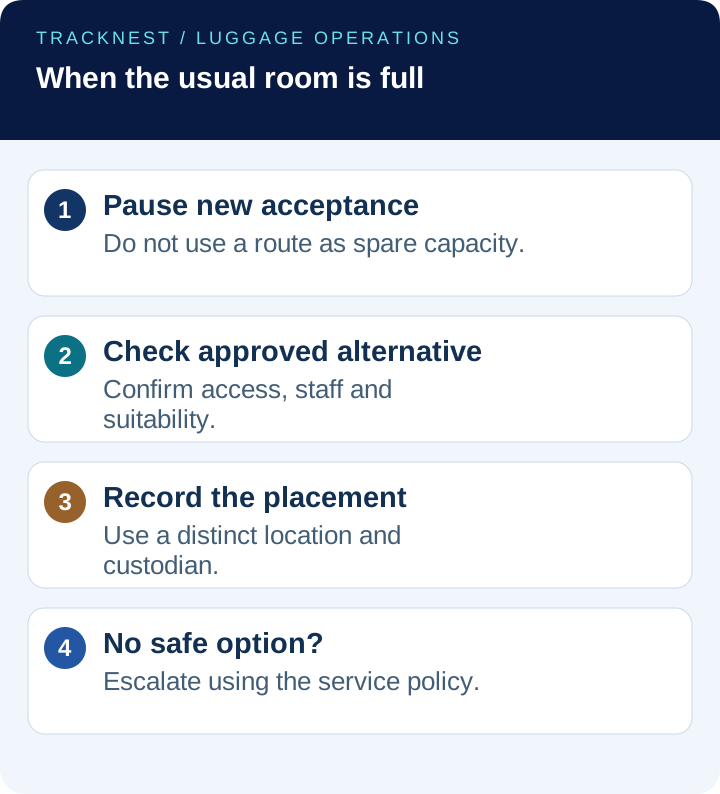
When the next accepted deposit would exceed usable capacity, pause. Check whether an approved alternative is actually available, staffed and suitable. If it is, assign the location and tell the relevant staff. If it is not, follow the property’s service policy and escalation process. “Put it somewhere for now” transfers the problem to a future employee without a retrieval plan.
Review search failures instead of blaming the last shift
When a case is hard to find, identify the failure point: a label was unreadable, the location was too broad, a movement was not entered or a release was recorded early. Repair that step. Repainting the entire room will not fix missing movement entries, and adding fields will not fix a blocked retrieval path.
For the actual shift-close count, use the luggage reconciliation process. Keep the measures local and observable, such as unresolved location mismatches, rather than promising that a layout change will eliminate loss.
Sources and scope
OSHA exit-route requirements and OSHA materials-storage requirements support the cited U.S. workplace safety requirements. OSHA materials-handling guidance provides general handling guidance. Layout names, capacity decision checks and movement-record fields are operational recommendations; the article does not prescribe universal dimensions or lifting limits.
Source review: October 15, 2026. The workflow, sample records and decision checks in this article are editorial recommendations for adapting to property policy. They are not a legal opinion, a universal hotel rule or a description of a particular software feature.