

The expected collection time has passed, and a suitcase is still in the luggage room. Before anyone calls it abandoned, checks it into lost-and-found or closes the record, the next shift needs to establish a simpler fact: is this the bag the record says should still be here?
Late collection is one of several reasons a storage record stays open. It is different from a case moved without a location update, a partial pickup entered as complete or an unidentified bag discovered in the room. This guide gives the hotel luggage-storage workflow a practical shift-close check.
Reconcile in both directions
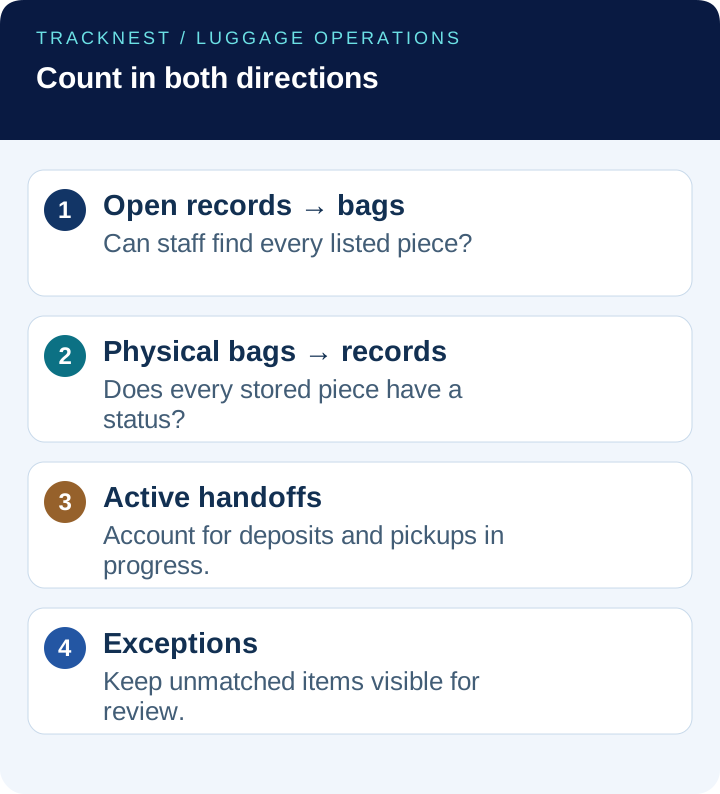
First take the list of open accepted-for-storage bag IDs and find the physical pieces. Then look at the physical bags in the approved storage areas and connect each one to an open record or another documented status. Doing only the first check can miss a bag that is physically present but absent from the open list.
Include approved overflow storage and any controlled retrieval staging area. If a case is waiting at the counter for a guest who has not completed collection, it should not vanish from the count merely because it left the shelf. Ask the employee responsible for the active handoff to confirm its status.
- Choose a clear point in time for the reconciliation.
- Identify collections or new deposits happening during the count.
- Match each open bag ID to its current physical position.
- Check each physical bag against the record.
- Document differences without closing them just to balance the total.
Sort discrepancies before choosing an action
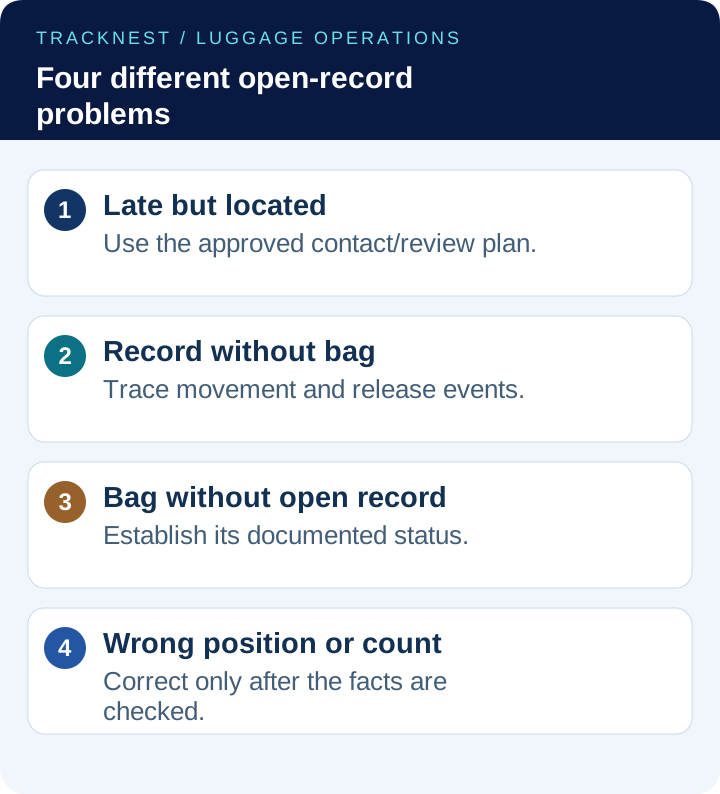
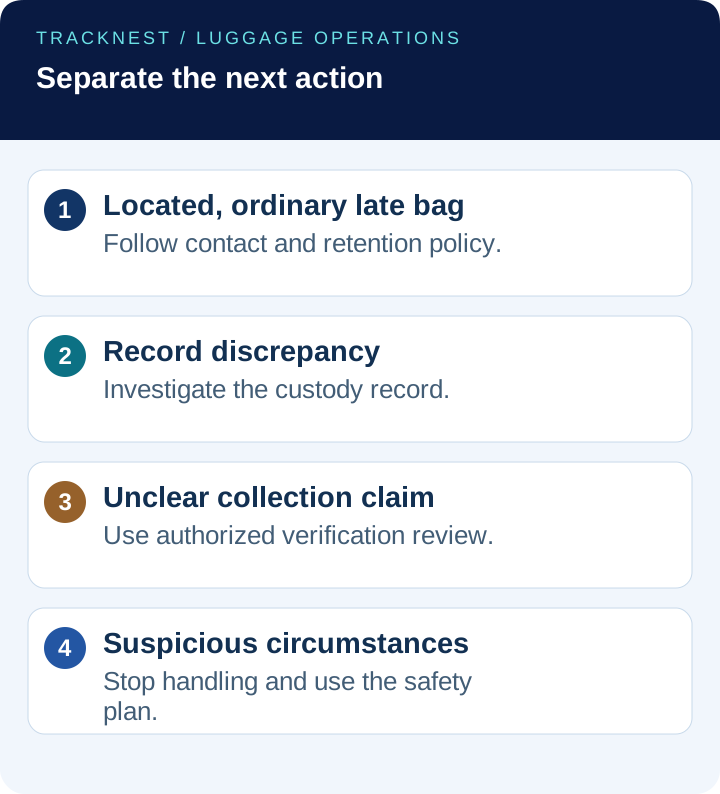
A record with a late pickup and a matching bag needs contact or review under policy. A record with no matching physical bag needs an investigation of movement and release events. A physical bag with no matching open record needs its intake or disposition established. These are different tasks, even if a dashboard calls all three “exceptions.”
Check partial collections carefully. A four-piece deposit may correctly have one bag remaining after three releases. The group split-pickup process makes that remaining item explicit. An ambiguous note such as “guest collected” is a reason to examine the release event, not an instruction to assume the room is empty.
Start with available records and authorized staff. Review the current and previous position, intake count, movement entries, release events and handoff notes. Keep observations separate from explanations: “bag not found at recorded position” is established; “guest took it without telling us” may be only a guess.
Contact the guest through an approved channel
If follow-up is appropriate, use contact information already authorized for the storage or guest-service purpose. Keep the message limited to the reference, collection arrangements and a clear way to reach the desk. Avoid sending exterior photographs, identity details or the contents of the record to an unverified new number supplied by someone else.
A sample operational message is: “We still have luggage under your storage reference. Please contact the front desk to confirm your collection plan and available collection hours.” Adapt it to the property’s approved wording and channel. Do not invent a deadline, fee or disposal warning that the policy does not support.
Record the time, channel and outcome of the contact attempt. “No response” is more precise than “guest abandoned bag.” If the person changes the pickup time or approved collector, update the future plan while preserving the history of earlier attempts and releases.
Write a handoff another person can act on
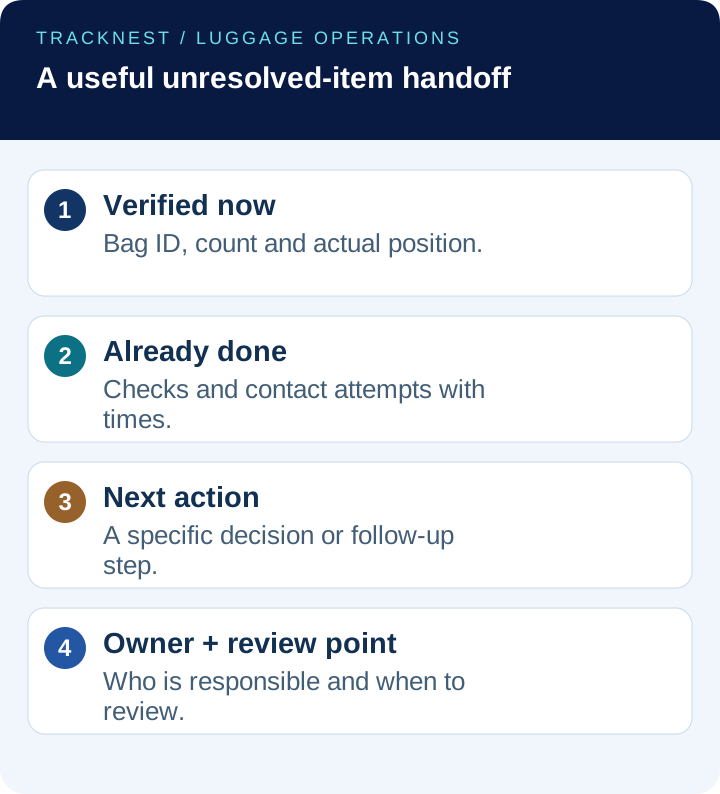
An unresolved record should name the next decision and who owns it. “Follow up tomorrow” leaves the next employee to work out who to contact, what has already been tried and whether the bag is even in its recorded position. A useful handoff contains the current verified facts, the action taken, the pending action and the next review point.
For example, an invented handoff might say: “Reference H-18: one case remains at LUG-B-02; count checked with incoming shift. Collection estimate passed. Approved contact attempted at 17:20 with no response. Duty manager to review the next action under retention policy at the next designated review.” This is a training example, not a prescribed time interval or a real incident.
Keep safety escalation separate from the late-pickup queue
A late pickup alone is not the same as a suspicious item. If the bag or its circumstances create a safety concern, stop the normal storage task and follow the property’s emergency procedure and responder instructions. Do not open or move a suspected dangerous item to finish the count.
CISA’s guidance distinguishes unattended from suspicious items and directs people not to touch suspected items, to move away and to notify appropriate emergency services. Staff should know how that guidance maps to the property’s emergency plan before a concern arises. A luggage-log status is not a substitute for the safety response.
For ordinary stored luggage, maintain safe placement and clear routes while a decision is pending. A late bag should not be moved into an exit route simply because it has exceeded the expected window. Use the approved storage and capacity process for any location change.
Close only on an actual documented outcome
A record can be closed when its bags have a documented disposition under the approved process, such as completed collection. If an item moves into a separate retention or found-property workflow, preserve the connection to the original storage record and identify the authorized decision. Do not relabel the bag to reset its history.
After resolving a mismatch, correct the process that produced it. If staff repeatedly discover detached tags, revisit tag attachment and intake checks. If a completed status hides bags still on site, fix how partial collections are recorded. A reconciliation is useful when it improves the next handoff, not when it produces a falsely tidy list.
Sources and scope
FTC business guidance on protecting personal information informs limited contact and record use. OSHA exit-route requirements supports the exit-route statement for covered U.S. workplaces. CISA guidance on unattended and suspicious items informs the separate safety escalation. Retention and disposition decisions require property-specific policy and applicable requirements; these sources do not establish a universal hotel luggage deadline.
Source review: October 15, 2026. The workflow, sample records and decision checks in this article are editorial recommendations for adapting to property policy. They are not a legal opinion, a universal hotel rule or a description of a particular software feature.