

A correct shipping address cannot fix a box containing the wrong belongings. The packing boundary is where a found-item record becomes a physical outbound parcel. An item-to-box check helps the next colleague understand exactly what was prepared, even when several returns are waiting on the same workbench.
This article concerns known ordinary belongings, such as a clean sweater or paperback, under an approved domestic return process. It is not a shipping classification guide. Follow the lost-property return coordination guide and the carrier’s current preparation requirements for the actual contents and route.

Work on one clearly identified return at a time
Bring the approved item references and current instruction to the preparation area. Keep unrelated belongings separate. Before anything enters a box, compare the objects with the approved return scope and resolve differences.
If the guest claimed a scarf and hat but only the scarf is ready, do not silently describe the parcel as “guest’s items.” Either follow an approved partial-return plan or hold preparation for a decision. The record must state what goes and what remains.

Use a contents check without unnecessary intrusion
Confirm the identity, number and visible condition of the belongings through the hotel’s approved procedure. Do not explore private documents, device contents or personal compartments simply to create a more detailed packing note. Where the contents cannot be established appropriately, ask the designated manager and shipping provider how to proceed.
Electronics, batteries, liquids and other special materials need separate review. USPS’s current restrictions page identifies categories with additional controls. This article does not authorize staff to prepare them. The existing electronics-return guide explains when to involve qualified personnel.
Agree who is responsible for packaging
Sometimes the hotel packs an ordinary item; sometimes an approved provider does. Record that responsibility before promising a ready-to-collect parcel. If a provider is collecting unboxed belongings for preparation elsewhere, describe the handoff that actually occurs rather than saying the hotel dispatched a finished parcel.
For eligible ordinary parcels, use the selected carrier’s preparation guidance. USPS’s package preparation guide addresses box choice, packing, addressing and postage. Those instructions are a reference for the responsible preparer, not a universal guarantee that any particular box or material is suitable.
Check the prepared parcel, not an earlier estimate
The final packaging can affect the information supplied for postage. If a guest created a label using an estimate, have the responsible shipper resolve any difference from the prepared parcel. Do not squeeze an item into unsuitable packaging merely to preserve the original estimate.
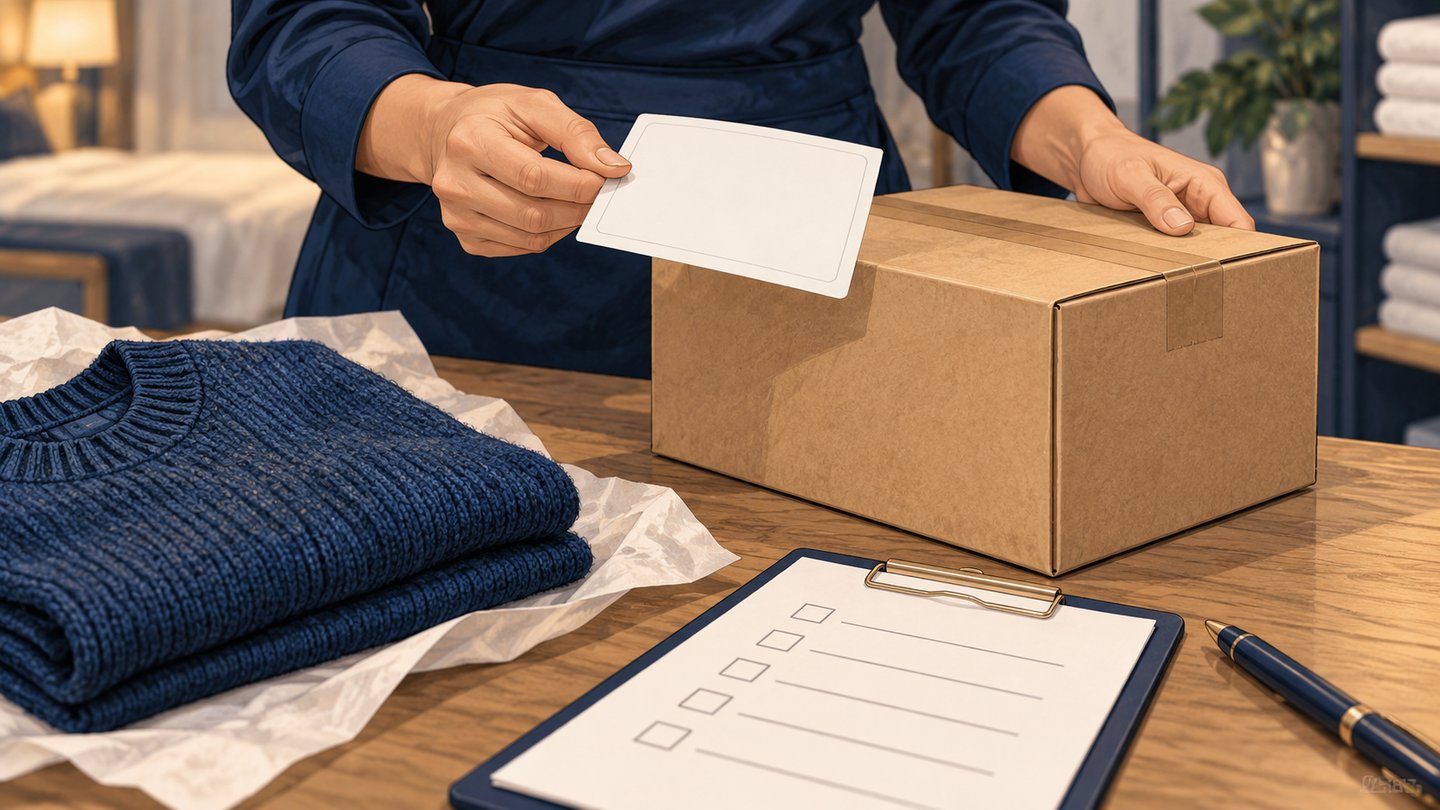
Make the final check before the contents disappear
- Match every included item to the approved return scope.
- Confirm that no unrelated belonging or working document is inside.
- Resolve any added, missing or changed item before closure.
- Confirm preparation responsibility and applicable provider instructions.
- Associate the parcel with its current active label or next preparation step.
- Record who completed the check and where the prepared parcel will be held.
A second colleague can perform the check where the property’s workflow calls for it; this is an operational option, not a universal requirement. Avoid photographing private contents or full address labels as a default substitute for a useful record.

Give multiple parcels separate identities
If one approved return requires two boxes, identify which belongings are in each. If two guests’ returns are prepared on the same shift, make the separation equally clear. A stack of similar cartons should not require the packer’s memory to retrieve the correct one.
Use the label review to check that each label belongs to its actual parcel. A parcel reference should connect back to the found-item record while revealing no unnecessary guest information on an exposed staging shelf.
A fictional partial-return decision
A guest requests a sweater and book. The sweater is present, but the book’s record has not been reconciled with the storage shelf. The preparer stops rather than packing a different similar book. The coordinator asks whether the guest wants an approved partial return or prefers to wait, following hotel policy.
If a partial return is accepted, the parcel record names the sweater only and keeps the book inquiry open. At the carrier handoff, staff release that parcel rather than closing every belonging attached to the guest’s case. That is the distinction the final contents check is meant to preserve.
Published October 23, 2026. Original operational recommendations for U.S. hotel teams; primary sources checked October 23, 2026. Follow current property policies and provider requirements. No carrier integration, legal compliance or delivery guarantee is implied.