

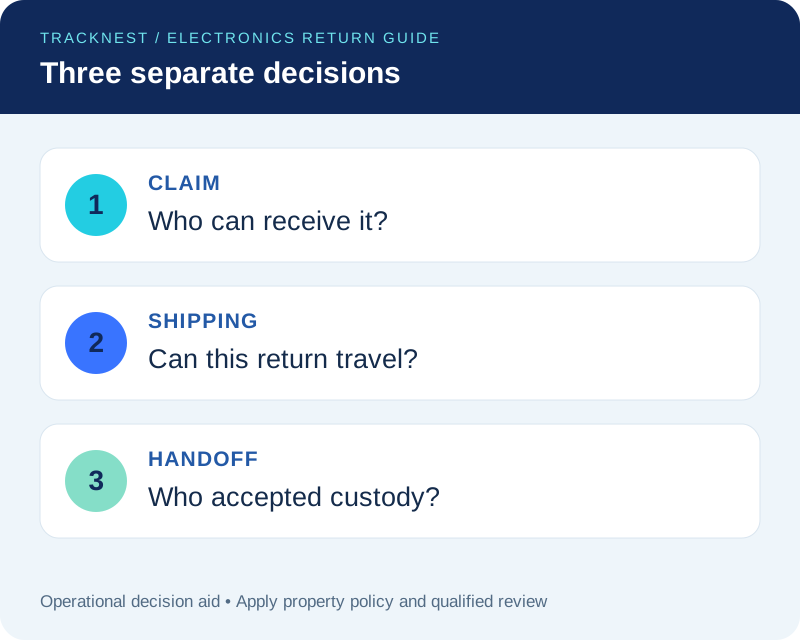
A phone found under a hotel pillow looks like a simple service opportunity: identify the guest, print a label, and send it back. In practice, three different decisions sit inside that request. Does this claimant own the item? Is the proposed shipment acceptable? Has the item actually left hotel custody? Treating one “approved” checkbox as an answer to all three creates avoidable confusion.
This guide proposes a front-desk workflow for U.S. hotel operations. It is an operational planning tool, not hazardous-material training or a determination that a particular item may be shipped. Property policy, applicable law, current carrier rules, and qualified shipping review still control individual cases.
Start with three separate decisions
Claim decision: a designated reviewer has enough independent information to release this item to this person. Shipping decision: a qualified provider has assessed the actual item, condition, destination and service. Handoff decision: the physical item was transferred and the event was recorded. A guest paying postage establishes none of those facts by itself.
Give each decision its own status, reviewer and timestamp. A useful record might say “claim approved; shipping review pending; still in hotel storage.” That sentence tells the next shift what it can do without inviting it to repeat the whole investigation or assume the parcel is already on its way.
Gate 1: identify the item without exploring its contents
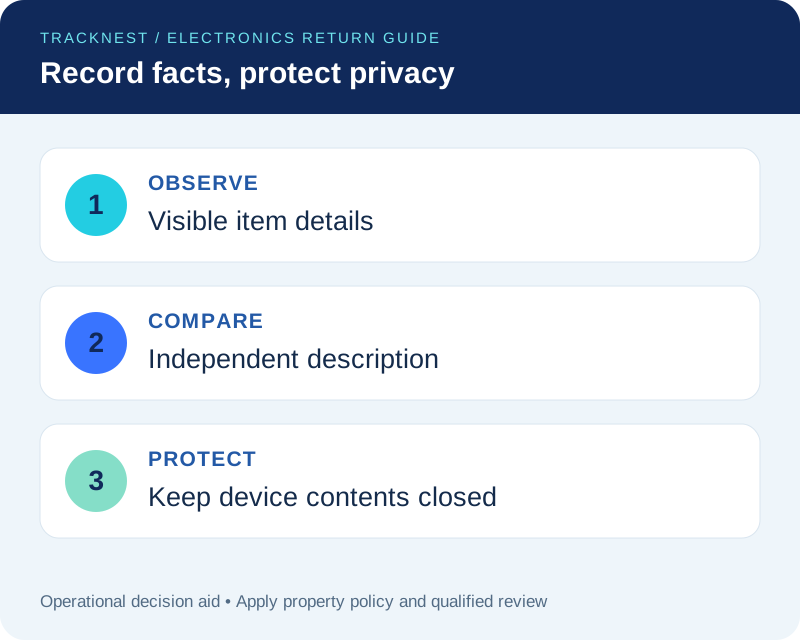
Assign an internal found-item reference. Record the location and time found, the employee who received it, its visible description and the approved storage location. Avoid photographing a lit screen or copying notifications. Ask the claimant to describe distinguishing features before revealing the hotel's description. Compare the account with independently recorded facts and the property's established verification process.
A plausible stay history helps contextualize the claim but does not establish ownership of every object found in that room. When two people claim the same device, preserve both accounts and refer the decision to a manager rather than asking either person to send a passcode.
Gate 2: decide who can assess the proposed return
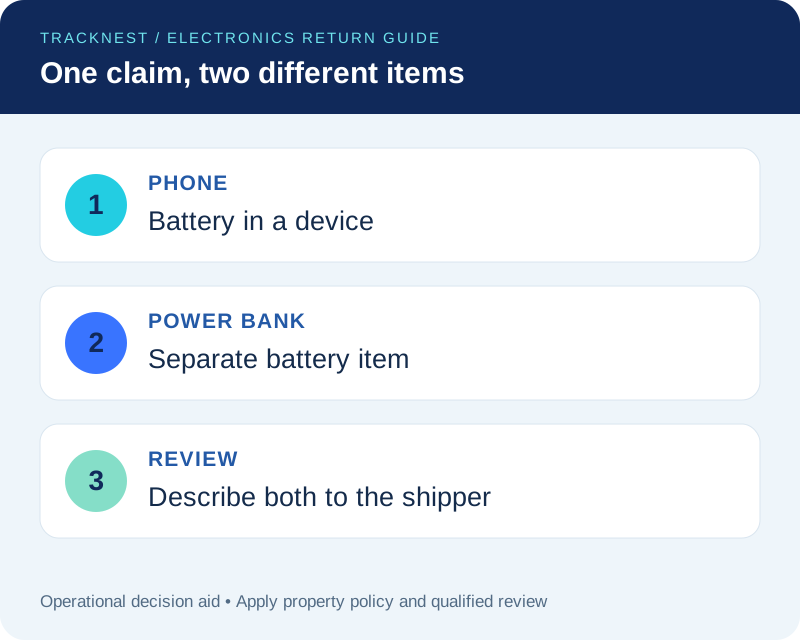
The shipping provider needs facts about the object, not just the guest's preferred delivery date. Identify whether the return includes a phone, laptop, power bank or loose battery, and describe observable condition without guessing about internal safety. PHMSA identifies lithium batteries as regulated hazardous material in transportation. Use its guidance to recognize why trained review matters, rather than treating this article as packing instructions. PHMSA lithium-battery guidance.
For USPS, begin with its current restrictions and the applicable detailed instructions. Do not assume a service suitable for another parcel is suitable for this one. Ask the provider to resolve the precise configuration, destination and service before purchasing postage or promising dispatch. USPS shipping restrictions.
Gate 3: document the actual handoff
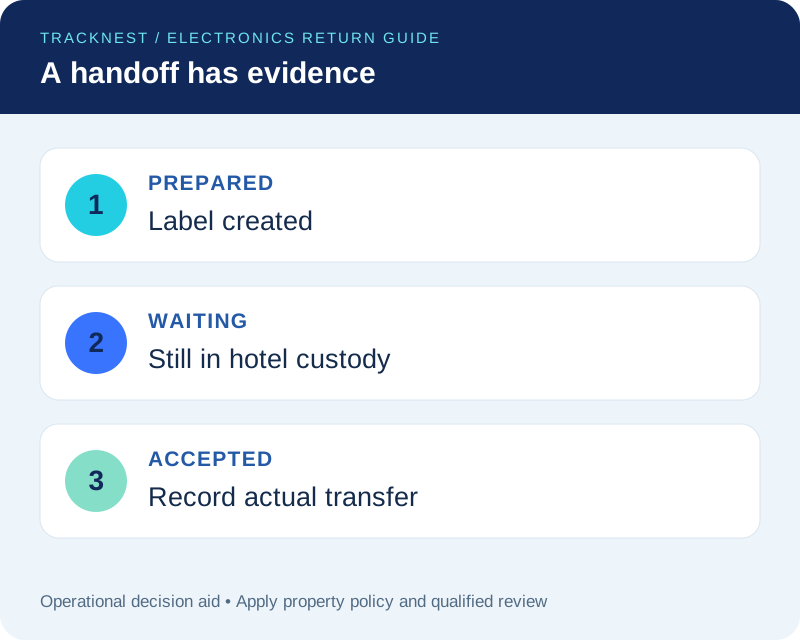
Record who released the item, who or which carrier accepted it, when, and the relevant tracking or receipt reference. “Label created” belongs in a preparation field. It is not evidence of collection. If the pickup fails, keep the item in the hotel's custody status and give the next shift a named owner for the outstanding action.
A worked example: a phone and a separate power bank
A guest identifies a blue phone case and asks for the phone and a black power bank to be sent using a prepaid express label. Staff match the claim under hotel policy. They record two objects, then pause dispatch because the label alone does not resolve shipment acceptance. A qualified shipping provider reviews both items and the route. The team communicates only the return option that review actually supports. If the proposed shipment is rejected, the record remains open for an approved alternative; it does not silently become “returned.”
Put the workflow into a shift handover
For every open return, the outgoing shift should be able to state the item reference, current decision gate, next action, responsible person and next review time. Keep guest contact details in the authorized record, not a public shift board. Review a few completed cases periodically for unclear decisions and missing handoff evidence. Measure unresolved cases by their actual blocker rather than grouping every delay under “waiting for guest.”
Published October 14, 2026. Original TrackNest operational guidance; source guidance checked October 14, 2026. Confirm current requirements for each return.
Continue the electronics-return workflow
- A Guest Left a Phone: Verify the Claim Without Unlocking It
- Power Bank or Battery Inside a Device? A Hotel Return-Intake Checklist
- A Used Laptop Is Not an Ordinary Parcel: Questions for the Shipping Provider
- When a Found Electronic Item Should Leave the Return-Shipping Queue
- The Hotel Electronics Return Record: Claim Approval to Carrier Handoff