

Finding the right owner is not the last operational decision in a lost-property case. A guest may approve a return, send a label, change the delivery address and then ask whether the parcel has left. If those instructions live in separate emails, the next shift may pack the right belonging using yesterday’s plan.
This guide begins after the hotel’s claim review has approved release. It focuses on ordinary belongings such as a known sweater or paperback for an approved domestic U.S. return. It does not determine ownership, shipping eligibility, insurance, legal retention periods or the treatment of valuables. Electronics, batteries, medicines, identity documents, liquids, unknown contents and other special items need the property’s relevant procedures and qualified shipping review instead.

Give one person responsibility for the next decision
The return coordinator does not need to perform every step. The role makes the current plan and unresolved questions clear. At any handover, another colleague should be able to identify the item, its actual location, what has been approved and what must happen next.
A useful working summary includes the found-item reference, approved recipient, current return method, instruction version or date, preparation owner, dispatch arrangement and next review. Store contact details in the approved restricted record, not a public shift board. These are proposed record categories, not claims about built-in TrackNest fields.
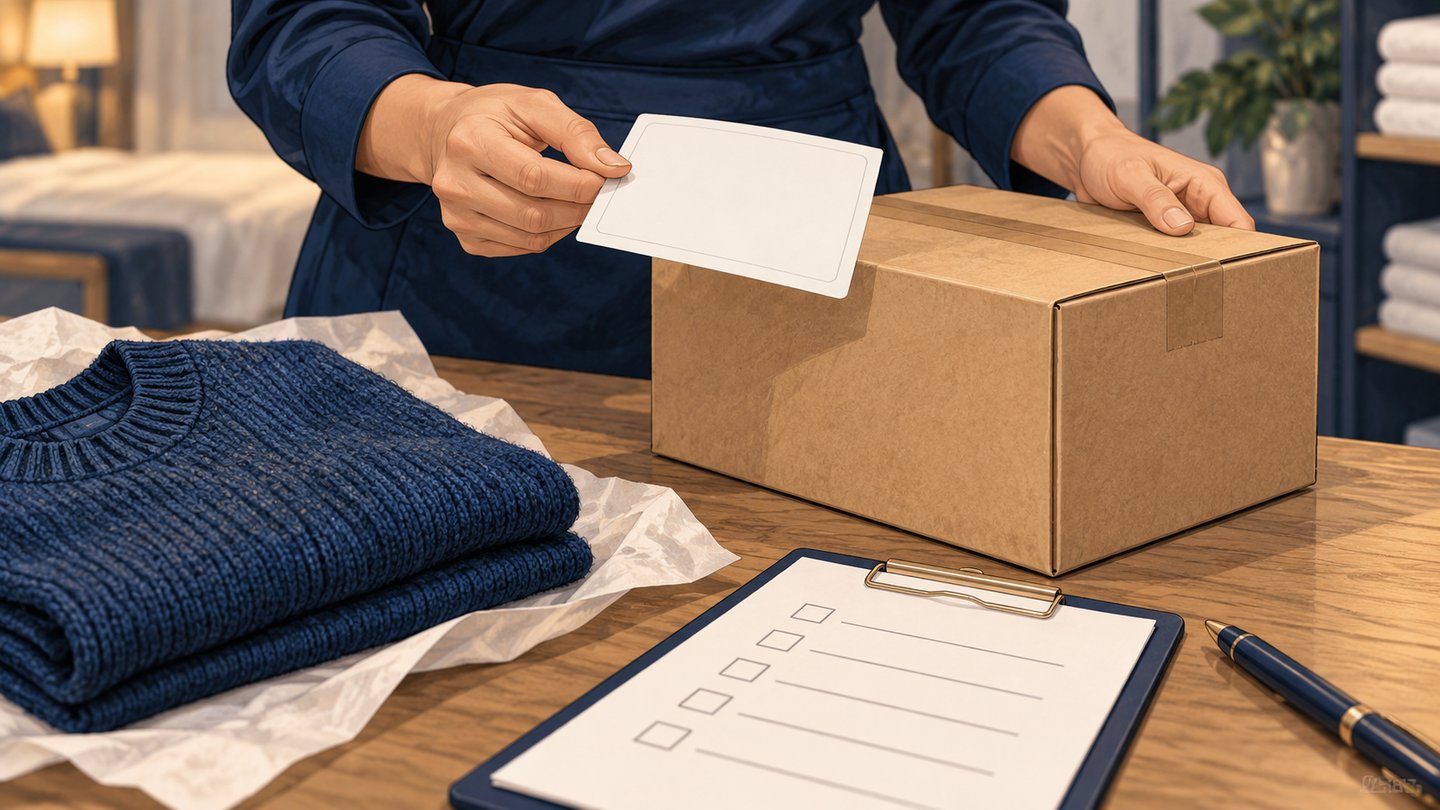
Use six separate checkpoints
1. Confirm the scope of the return
Match the approved claim with the actual belongings to be released. If two objects were found but the guest requests only one, say which remains. If a new item appears, do not silently add it to an approved return.
2. Establish the current destination
Ask the approved recipient to confirm the intended delivery details through the property’s normal channel. An old reservation address is not necessarily the requested destination. Resolve a change before preparing a label or handing over a parcel.
3. Match the label and parcel
A label must correspond to the current return and the parcel that is actually being prepared. Record who supplied it and which version staff accepted for use. A replacement label should clearly supersede the earlier preparation instruction.
4. Check the contents before closure
Confirm that the correct belongings go into the correct box. The person preparing it should know the limits of their shipping responsibility and when to refer the job to a qualified provider.
5. Record the physical handoff
A scheduled collection remains a plan until someone actually accepts the parcel. Preserve the release event and the available carrier evidence without making one stand in for the other.
6. Handle a failed journey as a new event
If the parcel returns, receive it back into controlled storage and link it to the earlier case. Do not overwrite the original dispatch or treat a second attempt as already approved.
A small working record that survives a shift change
- What: the item references and exact scope of this return.
- Where now: the actual storage or dispatch position, not the intended destination.
- Current instruction: approved recipient, method and latest confirmed version.
- Preparation: responsible person and any unresolved parcel or label issue.
- Next event: the arranged handoff, owner and review point.
- Evidence: what was physically observed and which external updates were received.
The record should reveal an unfinished step rather than making every case appear complete. “Packed; new destination requested; release paused” is useful. “Done” is not.

Work through a changed-plan example
In a fictional hotel, a guest’s sweater is approved for return to their home. The guest sends a prepaid label, then asks for delivery to a workplace instead. The coordinator pauses preparation, confirms the new instruction through the approved contact route and identifies the original label as superseded. A colleague checks the replacement label against the current instruction before it is attached.
The courier does not arrive during the arranged collection period. Staff leave the parcel in its controlled position, record that no release occurred and assign the next contact to the following shift. They do not tell the guest that the sweater is in transit. The example is an operational design exercise, not a client story or a promised product workflow.

Make guest updates match the event
Use plain progress statements: “We have your updated instructions,” “The parcel is prepared and awaiting collection,” or “Our colleague handed the parcel to the carrier at the recorded time.” If tracking has not updated, describe that separately rather than guessing where the parcel is.
Carrier guidance matters at the point of action. USPS distinguishes prohibited and restricted contents; this checklist does not establish mailability. UPS explains that Label Created is shipment information, not possession. Use the actual provider’s current instructions for the actual return.
Use the right decision guide
- A Different Address Arrives: Control Changes to a Lost-Property Return
- The Guest Sends a Label: Review It Before Preparing the Return
- Before the Box Closes: A Lost-Property Packing and Contents Check
- Booked Pickup Is Not Dispatch: Document a Lost-Property Carrier Handoff
- The Return Comes Back: Reopen Undeliverable Hotel Lost Property
TrackNest supports lost-and-found records alongside package tracking and luggage check-in/out. Bring a changed-address or missed-pickup example to a TrackNest demo to discuss how the team would keep the relevant records clear. Do not assume shipping-label purchase, courier booking or carrier tracking integration is included.
Published October 23, 2026. Original operational recommendations for U.S. hotel teams; primary sources checked October 23, 2026. Follow current property policies and provider requirements. No carrier integration, legal compliance or delivery guarantee is implied.