
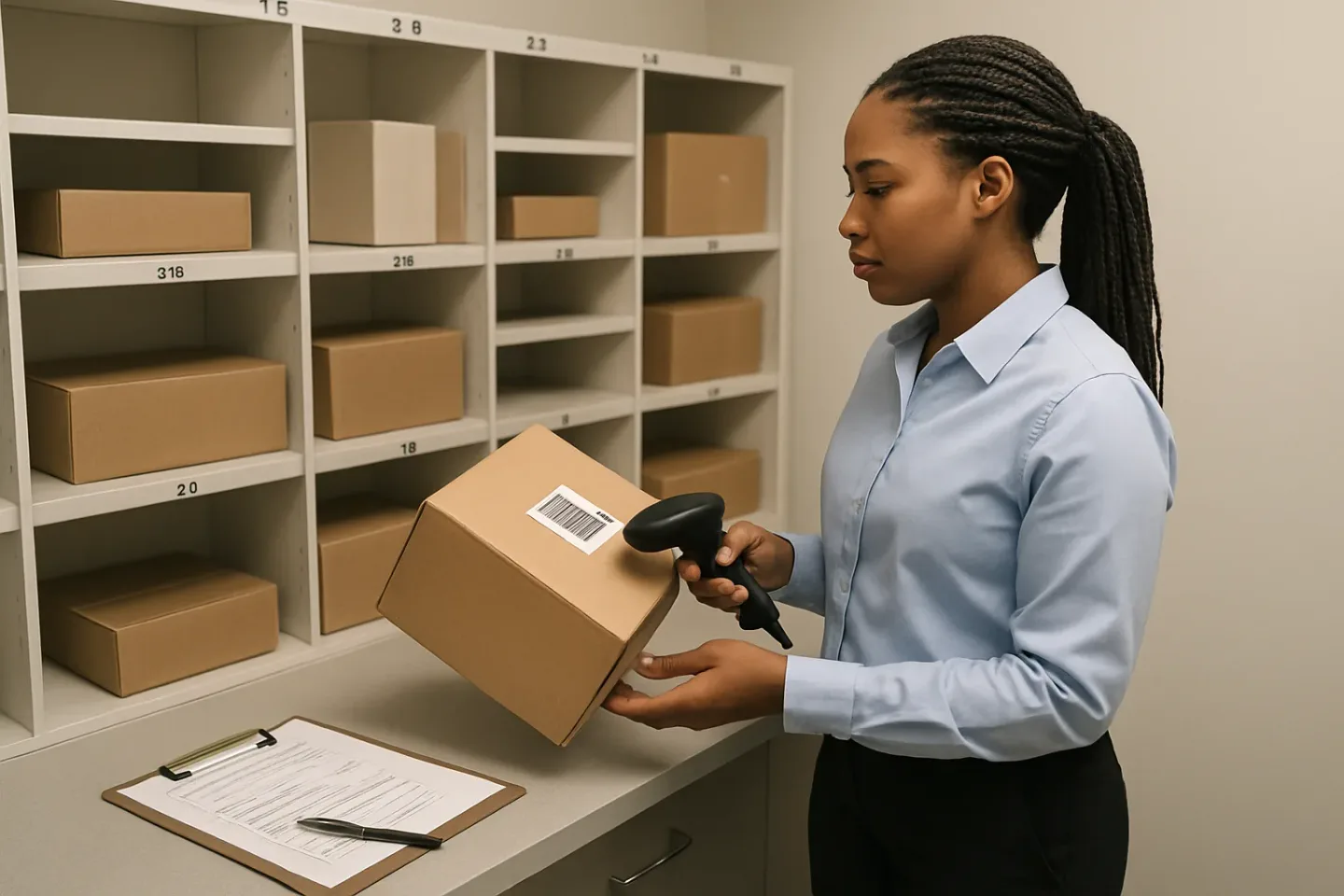
Package rooms don’t overflow because teams “don’t care.” They overflow because the uncomfortable decision points are unclear: When is a package officially unclaimed? How many notices are enough? What about a resident traveling or in the hospital? And when you finally return to sender or dispose—how do you prove you followed your own policy when a resident disputes it?
This unclaimed packages policy apartment blueprint is designed for multifamily front desks, concierge teams, and regional ops leaders who need a workflow staff can actually execute during peak surges (move-in, holidays, promotions). Industry conversations around move-in spikes and overflow planning underscore the same reality: demand surges are predictable, but capacity isn’t infinite—so your holding timelines and escalation steps must be explicit and enforceable.
Note: Policies vary widely by property, carrier, and jurisdiction. This is operational guidance—not legal advice. Use it as a starting point for your counsel/leadership review.
Define the decision points your team keeps avoiding
Before you write a package holding time policy, align internally on four definitions. These eliminate 80% of “but you never told me” disputes.
- Intake timestamp (Day 0): When staff scans/accepts the package into your system (not when the carrier marks “delivered”).
- Claimed: Resident pickup verified (signature, PIN, photo, or QR scan).
- Unclaimed: Past a documented final notice deadline with no approved exception on file.
- Disposition: What happens next: return to sender package policy, approved disposal/donation, or secondary storage with fees.
Make one more choice up front: whether you offer secondary storage (overflow cage/locker) and whether you charge fees. Fees can be defensible operationally, but only if they’re communicated ahead of time and applied consistently.
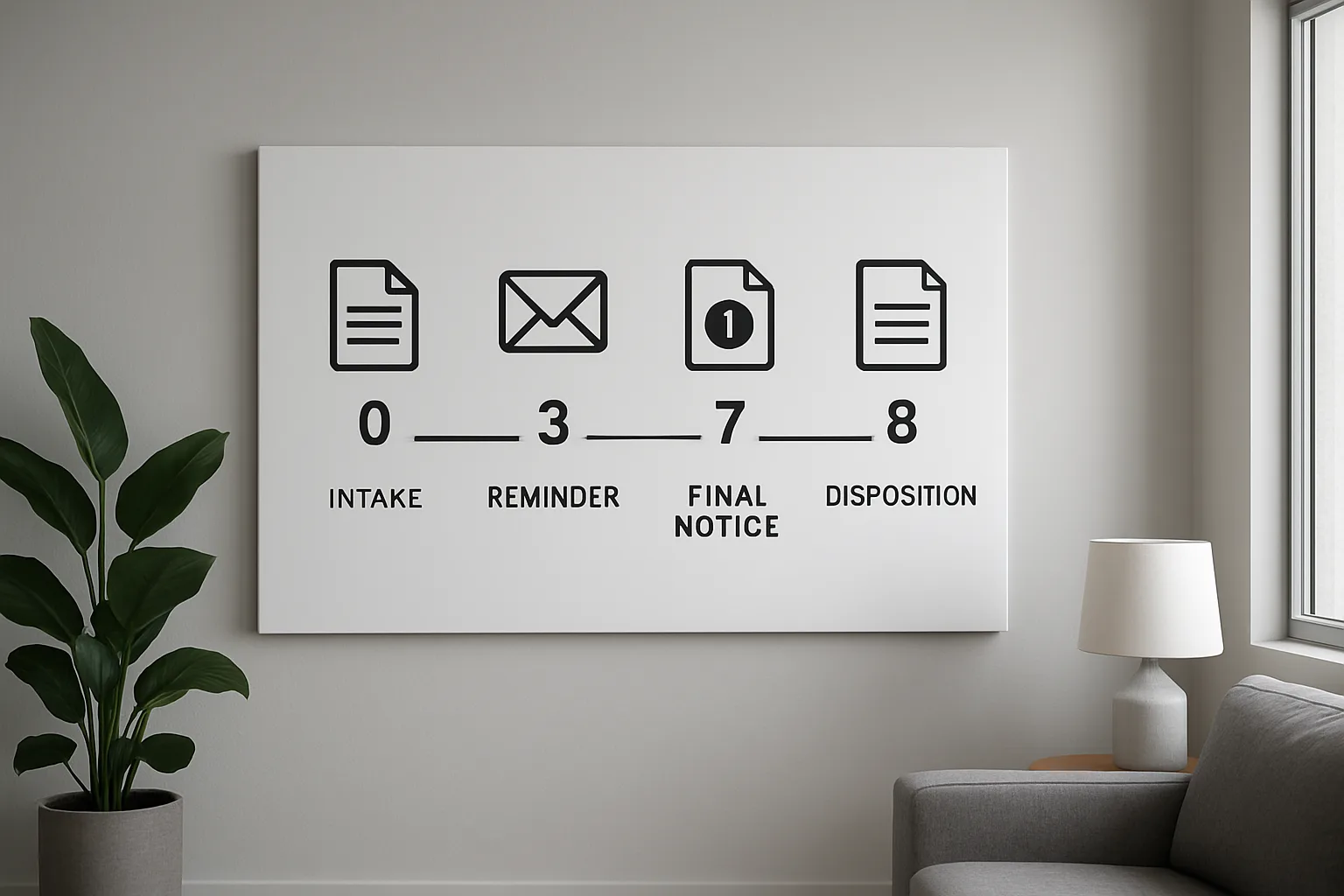
Decision tree: Day 0 intake → reminders → final notice → RTS/disposal/secondary storage
Use this as your baseline workflow. Adjust the day counts to match your building capacity and staffing—especially during known surge periods.
Day 0: Intake + first notice
- Scan/record package into your system (timestamp + staff initials).
- Apply an internal label (QR label recommended) tied to the record.
- Store by zone (small parcel shelves, oversized area, refrigerated if applicable).
- Send notification immediately (email/SMS/push): “Delivered and ready for pickup.”
Day X: Reminder (friendly)
Typical: 2–3 business days after intake (or sooner during move-in).
- Send reminder with pickup hours, ID requirements, and any restrictions (oversized pickup window, concierge hours).
- If package is oversized or blocking egress, flag as capacity-critical (see reason codes below).
Day Y: Final notice + exception window
Typical: 5–7 calendar days after intake for standard parcels; shorter for capacity-critical items.
- Send “final notice” with an explicit deadline (date + time) and the stated outcome (RTS/disposal/fee storage).
- Include a simple method to request an exception: reply to the message, call, or submit a form.
- Log any resident response as a note on the package record.
Day Z: Disposition (RTS / disposal / secondary storage)
Day Z is the day after the final notice deadline.
- Return to sender: Default for most carriers and unopened parcels.
- Secondary storage: Move to overflow with a new location code + fee tracking (if applicable).
- Disposal: Only when your policy explicitly allows it and the item type is eligible (see “disposal procedure” section).
Operational insight: Your “days” should be a capacity tool, not a guess. When package volume spikes (move-in, holidays), shorter reminder cycles and clearer overflow triggers prevent unsafe stacking and lost parcels.
Exceptions without favoritism: travel, medical, and accessibility scenarios
Exceptions are where teams get inconsistent. The goal is to allow reasonable flexibility while preserving fairness and capacity. Build a simple exception framework:
1) Approved exception types (examples)
- Travel: Resident provides return date; extend final notice deadline to a specific date/time.
- Medical: Resident (or authorized contact) requests extension; avoid collecting sensitive details—just document “medical exception requested” and the new deadline.
- Accessibility: Offer scheduled pickup window or authorized pickup person process.
2) Required fields for every exception
- Exception type (travel/medical/accessibility/other)
- Approved by (staff initials + manager initials if required)
- New deadline date/time
- Contact method used (email/SMS/phone) + timestamp
In TrackNest-style workflows, exceptions work best as a status plus a note attached to the package record (not buried in someone’s inbox). That way, any staff member can enforce the same rule on the next shift.
No-surprises resident communication templates (addendum + email/SMS)
The fastest way to reduce disputes is to make the outcome predictable before a package arrives. Use the prompts below as starting language for your lease addendum or house rules and keep your tone neutral and operational.
Lease addendum / house rules prompts (customize)
- Holding window: “Packages may be held for up to [X] days from logged receipt. After that, items may be returned to sender, moved to overflow storage, or handled per the disposition steps below.”
- Notice steps: “We provide delivery notification, at least one reminder, and a final notice with a stated deadline before disposition.”
- Disposition options: “Unclaimed items may be returned to sender. If return is not possible, items may be disposed of or donated as permitted by policy and applicable requirements.”
- Oversized/capacity trigger: “Oversized items or items stored in capacity-limited areas may have shorter timelines during peak volume periods.”
- Exceptions: “Residents may request an extension due to travel, medical, or accessibility needs prior to the final deadline.”
- Authorized pickup: “Residents may designate an authorized pickup person in writing; photo ID may be required.”
- Fees (if used): “Secondary storage fees of [$] per day may apply after [Y] days; fees are waived for approved exceptions.”
Email/SMS templates (copy/paste)
1) Delivery notice (Day 0)
“Your package is ready for pickup at [Location]. Hours: [Hours]. Please bring ID. Tracking/Ref: [Code].”
2) Friendly reminder (Day X)
“Reminder: you have a package ready for pickup since [Date]. Please pick up by [Final Notice Date if you include it early]. Ref: [Code].”
3) Final notice (Day Y)
“Final notice: package awaiting pickup. Please pick up by [Deadline Date/Time]. After this deadline, it may be [returned to sender / moved to overflow storage with fees / disposed per policy]. Need an extension due to travel/medical/accessibility? Reply YES + your preferred pickup date.”
4) Disposition confirmation (Day Z)
“Update: your package (Ref: [Code]) was [returned to sender / moved to overflow storage] on [Date/Time]. Questions? Contact [Phone/Email].”
Warning: Don’t promise “we will hold all packages for X days” if your capacity plan can’t support it during move-in. If you need surge flexibility, write it in plainly.
Operations: batching returns, documenting handoff, and keeping a minimal audit record
This is where policies succeed or fail. Your workflow must fit the front desk’s real day.
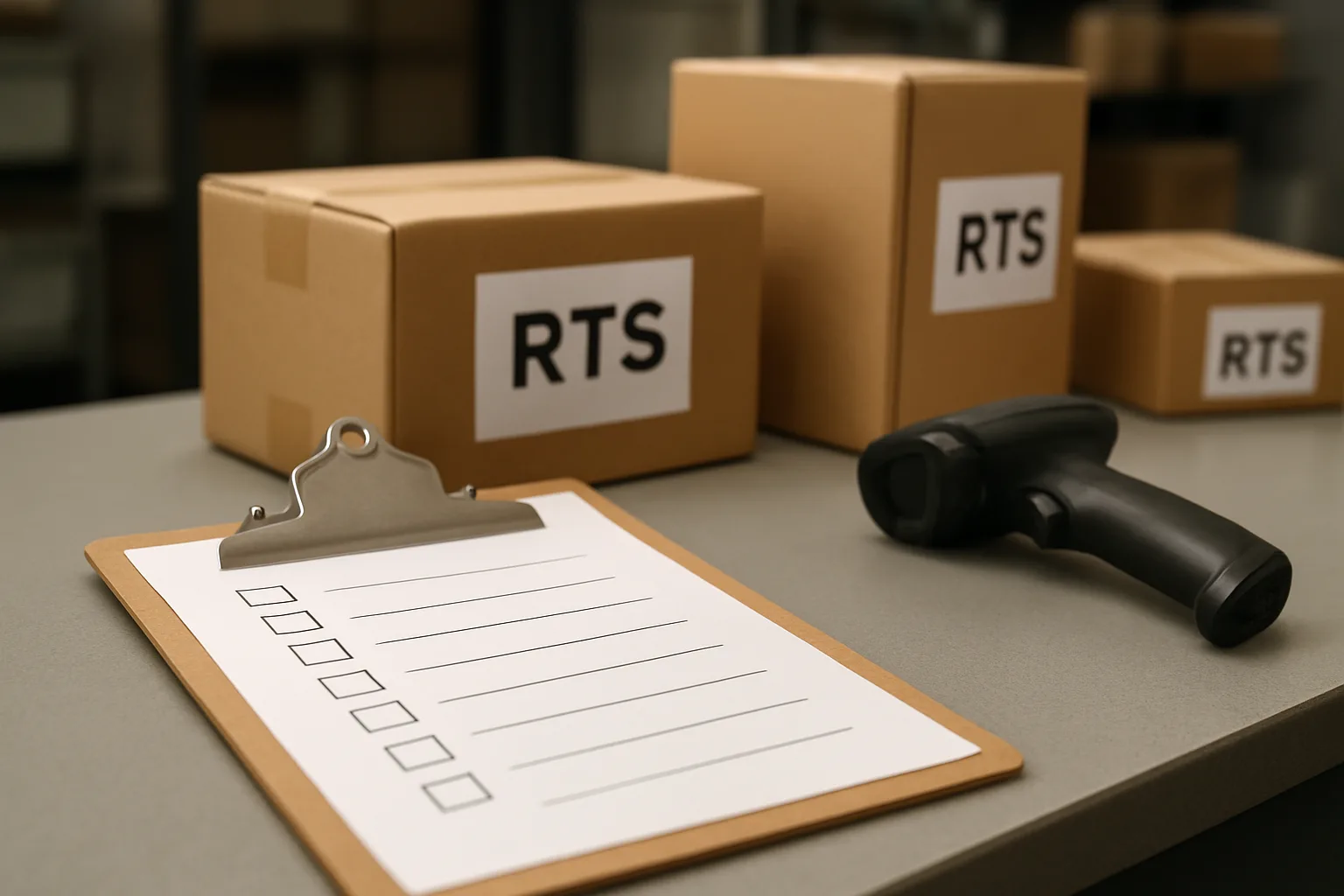
Batching RTS (return to sender) without losing control
- Set a cadence: e.g., RTS batches Tue/Thu at 2pm (daily during peak season).
- Pull by status: Filter “Disposition due” and print/pull a batch list.
- Verify identity: Match label/QR to record before moving it to RTS staging.
- Stage securely: A bin/cage labeled “RTS—Awaiting Carrier Handoff.”
Carrier handoff documentation (what to record)
- Handoff timestamp
- Carrier name (USPS/UPS/FedEx/other) and method (pickup/dropoff)
- Staff initials
- Package count in batch
- Proof artifact (pickup receipt photo, manifest number, or desk log entry)
Minimal audit record: the “dispute-proof” fields
You don’t need a novel—just consistent fields:
- Timestamps: intake, each notice, exception approval, disposition, handoff
- Staff initials: who handled each step
- Location code: shelf/zone/overflow cage
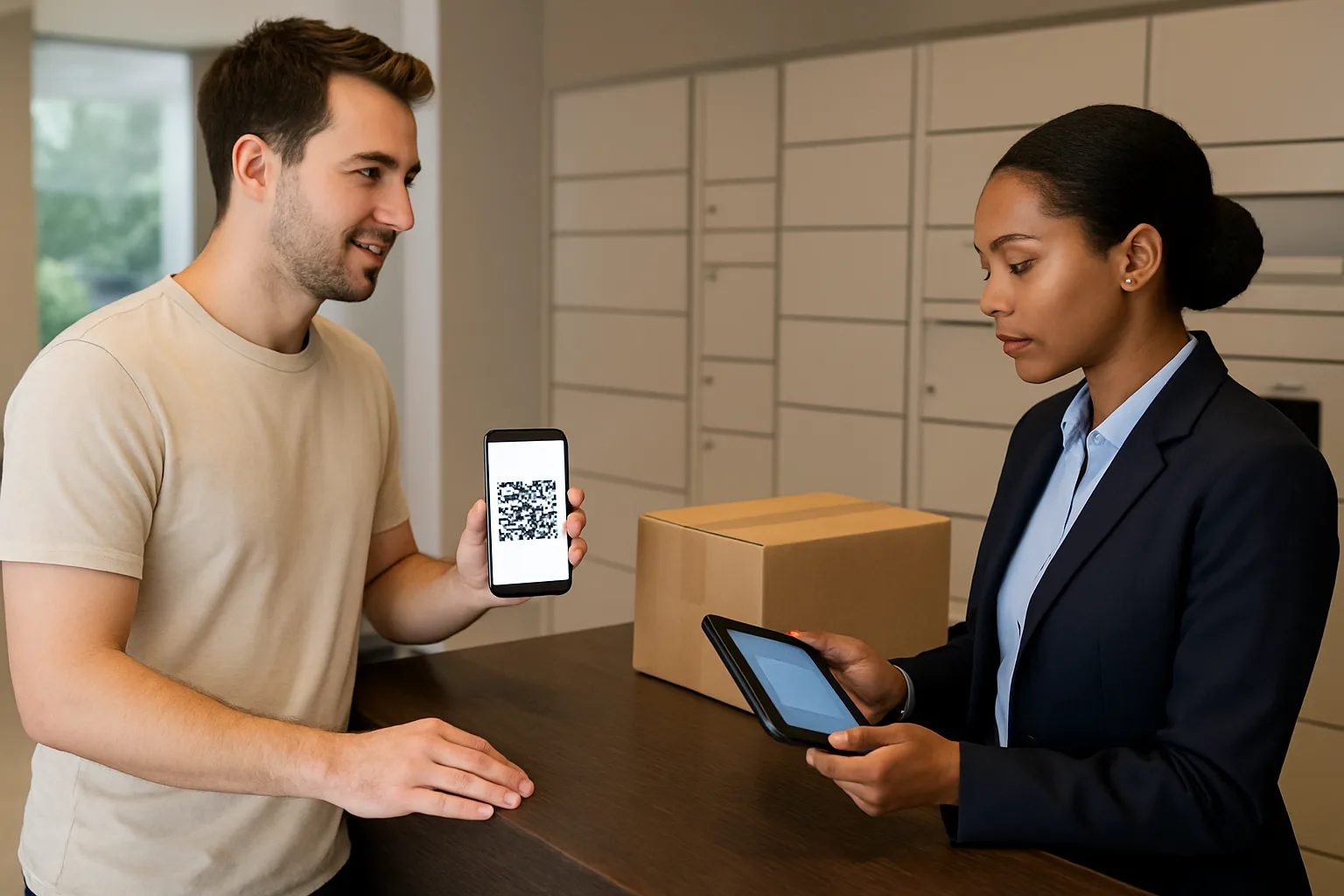
- Pickup verification: QR scan/signature/PIN or authorized pickup record
- Reason codes: why it moved/disposed (see below)
Package disposal procedure (only if your policy allows it)
If you must address abandoned packages apartment mailroom scenarios, keep disposal narrow and documented:
- Dispose only after final notice deadline + any required waiting period you adopt.
- Exclude restricted items (perishables, medications, anything leaking/damaged—route to safety protocol).
- Record disposal method: trash, donation partner, hazardous handling.
- Log: date/time, staff initials, reason code, and a brief note (“box opened/damaged” is not a reason—avoid opening unless safety requires it).
TrackNest-style tools help here by keeping timestamps, notes, notifications, and pickup verification together—so when a resident challenges an outcome, you can export a clean history rather than reconstructing it from texts and memory.
FAQ
- What’s a reasonable package holding time policy for apartments?
-
Many buildings choose a short, operationally realistic window (often under two weeks) with a reminder + final notice sequence. The “right” window depends on staffing and package room capacity policy constraints—especially during move-in and holidays.
- Should our default be return to sender or disposal?
-
Defaulting to return to sender is generally easier to justify operationally and less emotionally charged than disposal. Disposal should be a clearly limited backstop with strict documentation and eligibility rules.
- How do we handle residents who say they never received notifications?
-
Log notice timestamps and channels (email/SMS). If possible, keep delivery confirmations (system logs) and offer a consistent backup step (e.g., one phone call attempt for final notice on high-value or oversized items).
- Can we charge storage fees for unclaimed packages?
-
Some properties do, but it must be disclosed clearly (lease addendum/house rules), applied consistently, and tied to a defined secondary storage process. Review with your leadership/counsel for local requirements.
- What if a package is oversized and blocking operations?
-
Use a “capacity-critical” track: shorter reminder cycles, explicit final deadline, and a secondary storage option. Document the reason code (CAP) so staff decisions are consistent and defensible.
- What’s the best way to prove chain of custody at the front desk?
-
Use intake scans/QR labels, location codes, staff initials, and pickup verification (QR scan/PIN/signature). For RTS, keep a batch handoff log with timestamps and carrier proof artifacts.
CTA: Make the workflow enforceable (and easy on your desk)
If your current process lives in sticky notes, spreadsheets, and memory, the policy will break during peak volume. TrackNest supports a practical chain of custody—intake timestamps, automated notifications, exception notes, reason codes, and pickup verification—so your team can follow the same steps every shift and document outcomes without extra admin.
Next step: Draft your Day 0 / Day X / Day Y / Day Z timeline, choose your exception rules, and turn the templates above into your resident-facing “no surprises” messages.
Conclusion
An effective unclaimed packages policy apartment teams can defend is less about being strict and more about being explicit: clear time windows, predictable notices, consistent exceptions, and a documented disposition workflow. When the package room surges (and it will), your staff shouldn’t be deciding from scratch—they should be executing a checklist that protects capacity, resident experience, and your team.