
Build the candidate set before selecting the object
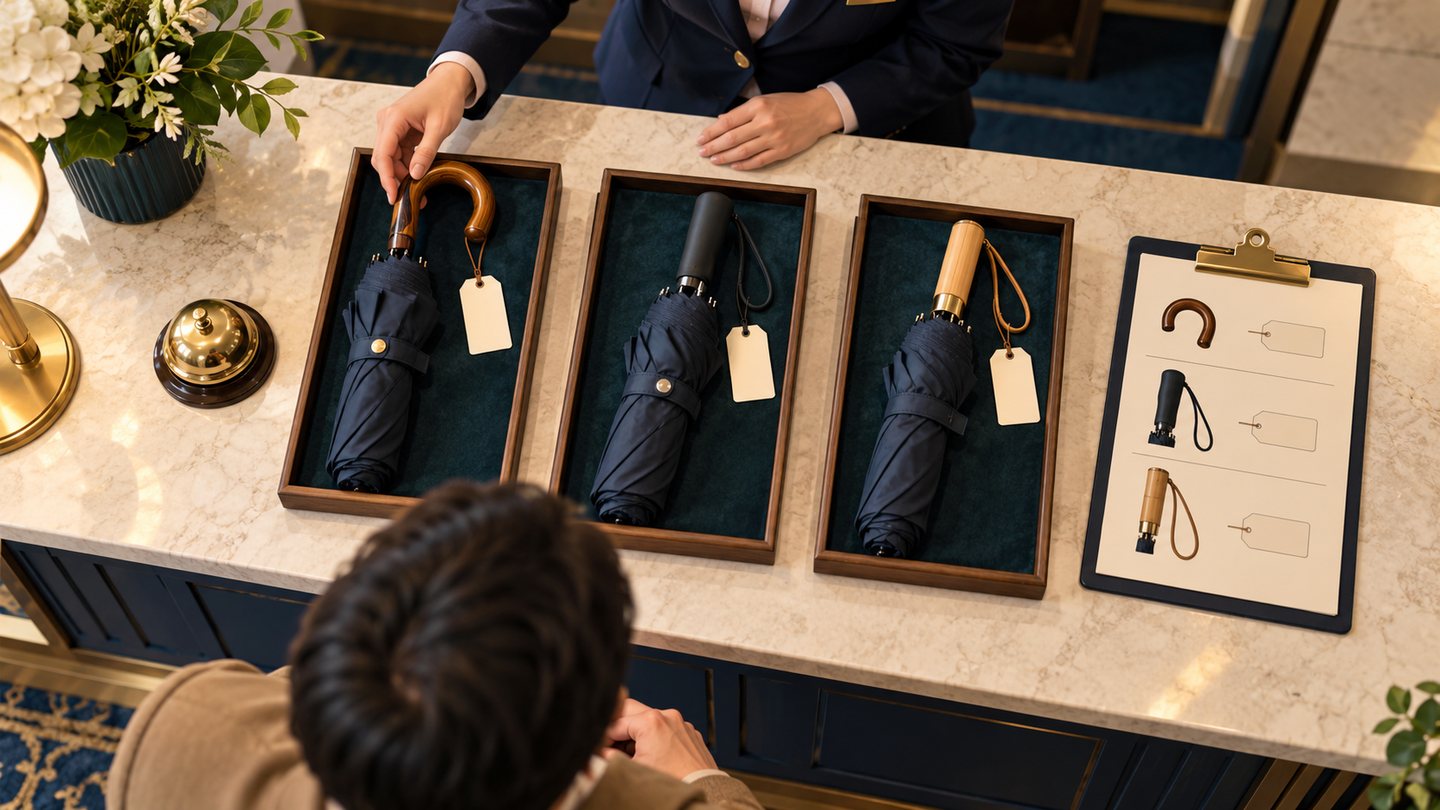
A visitor describes a dark umbrella with a curved handle. Three umbrellas look plausible on the shelf. Choosing the first one retrieved makes the remaining conversation revolve around that candidate, even when a different item would fit better. A small comparison record helps the desk keep the possibilities open until there is a reason to narrow them.
This method covers ordinary, already-intaken belongings. The ambiguous-claim review guide explains the overall decision process. Begin with the saved claimant account and stable references for the physical items. If tags or storage records are uncertain, resolve that inventory issue before treating the shelf contents as a reliable candidate set.

Record why each item entered the search
List the plausible candidates privately using their existing item references. Add a short reason for considering each: the broad type, a compatible loss window, an externally visible feature or a relevant location report. Be explicit when the location is uncertain or the date refers to desk receipt rather than discovery.
Do not let one approximate field exclude an otherwise plausible candidate without review. A person may describe navy as black, and an intake note may use a different everyday word for the material. Equally, an exact-looking match on color should not override a known conflict in shape or construction. Preserve the level of detail each source can actually support.
Keep the search bounded by the claim and the available inventory. If staff extend it to another storage area or date range, record that scope and the reason. “No match in the reviewed cabinet” is more precise than “the hotel does not have it” when another acknowledged holding area has not been checked.
Compare the same features across every candidate
For each object, write a compact comparison using consistent labels. These are suggested note headings, not claims about software functionality:
- Claim detail: the relevant feature and whether the claimant supplied it independently.
- Item observation: what the intake record or authorized reinspection actually shows.
- Result: consistent, contradictory or unknown.
- Next check: the one unresolved question that could change the comparison.
Use the same detail across the candidate set rather than describing each object with whichever feature makes it sound convincing. If handle shape matters, compare handle shape for all three. Leave “not recorded” visible until someone is authorized to inspect it. A blank should not be read as “no distinctive mark.”

A fictional three-umbrella comparison
Candidate U-11
The intake record describes a dark full-length umbrella with a curved wooden handle and a pale external wrist cord. The claimant independently described a full-length dark umbrella with a curved handle but did not remember whether it had a cord. Type and handle are consistent. The cord is unknown from the claimant’s account, not contradictory.
Candidate U-12
This object is a compact folding umbrella with a curved handle. The dark fabric and curve fit the broad account, but the construction conflicts with the claimant’s specific description of a full-length umbrella. Record that difference rather than deleting the candidate without explanation or counting the two generic matches as more important.
Candidate U-13
The third item is full-length with a curved wooden handle. Its intake description has no note about a cord. That absence does not establish that the cord is missing. An authorized external check may clarify it. Until then, U-11 and U-13 remain plausible on the recorded facts.
The useful conclusion is not “U-11 wins two points.” It is that one candidate has a material construction conflict and two remain insufficiently distinguished. The next reviewer can now see exactly which question deserves attention.

Inspect without mixing the objects
If a physical recheck is appropriate, retrieve identified candidates one at a time or keep their separate references unambiguously attached. Do not lay several similar umbrellas on a counter and rely on memory to return them to their records. Check the reference again after handling and confirm each storage location when the review is finished.
Keep the claimant from receiving an unsolicited catalog of every candidate’s distinguishing features. A shelf lineup or photograph of the whole comparison may supply the answers the review was intended to assess. Where the property’s policy permits using an image the claimant already has, ask only for a relevant item image through the approved channel, not an entire photo collection or unrelated purchase history.
Record what any new image actually establishes and its limitations. A photo of a common umbrella model may explain the claimed shape without distinguishing this physical umbrella from another of the same design.
Narrow the set with a reason and retain the remainder
When a candidate is ruled out, retain its reference and the meaningful reason in the claim review. Do not mark the physical item as rejected or remove it from inventory; a different person may still claim it. If another active inquiry concerns the leading candidate, move to the competing-claims process rather than treating the first completed comparison as automatic priority.
If no candidate can be distinguished with proportionate information, give the reviewer the remaining set and use the inconclusive-review closeout when appropriate. If one is approved under policy, compare the selected physical reference again at the eventual handoff. The object approved in the review and the object leaving storage must be the same one.

Bring the decision to a TrackNest demo
Bring three fictional item records with deliberately similar descriptions. Ask staff to show the candidate comparison and recover the correct physical reference without relying on the original employee’s memory. Request a TrackNest demo and ask how the proposed record would fit the available workflow. Confirm the behavior you need rather than assuming automated matching, history, permissions or claim rules.
Source and scope
The FTC advises limiting access to personal information according to business need. FTC: Protecting Personal Information, A Guide for Business. Source checked October 21, 2026. The review tools and fictional examples in this article are original operational recommendations, not an ownership standard, legal advice or a description of automatic software controls. Apply the property’s approved policies and relevant requirements.