
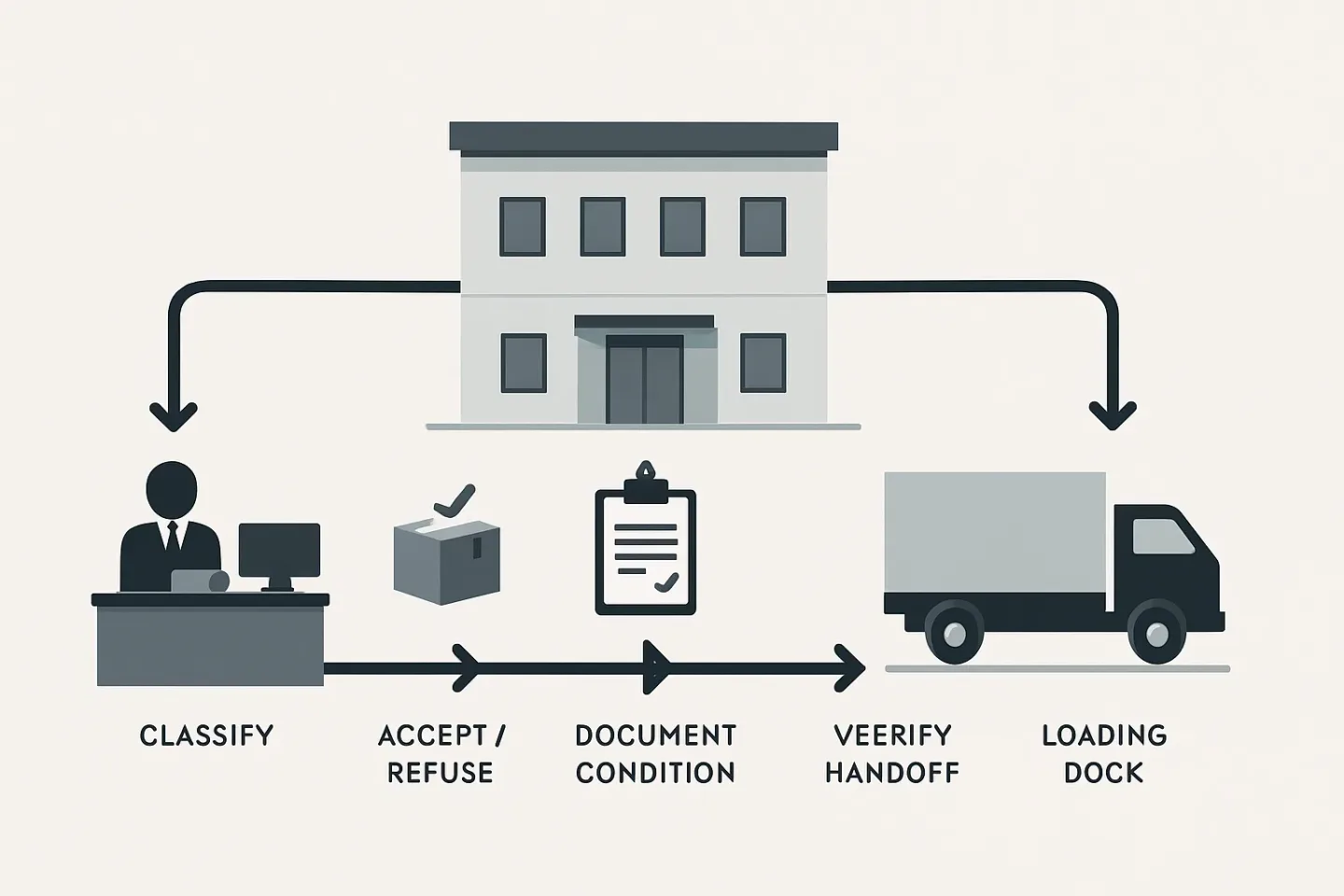
Most buildings have a solid package routine: carrier arrives, staff scans, parcel goes to shelf, resident gets notified. That workflow breaks the moment a delivery is (a) too big, (b) too heavy, (c) time-sensitive, or (d) liability-sensitive.
Think couches and appliances, freight pallets, alcohol, “adult signature required,” or anything that shows up damaged and becomes a dispute. If you treat those like normal parcels, you get lobby pileups, blocked egress, frustrated residents, and staff put in a position they should never be in: deciding whether to sign for thousands of dollars of goods.
This playbook helps you write an oversized package delivery apartment policy that creates a parallel intake lane—typically routed to the loading dock or a controlled staging zone—so the front desk stays a service point, not a warehouse.
Where the normal package workflow breaks (and why it matters)
Before you fix the process, name the failure points:
- Space mismatch: Oversize items don’t fit shelves and become hallway/lobby hazards.
- Responsibility ambiguity: “Can you sign for it?” becomes a staff-by-staff judgment call.
- Condition disputes: Damage claims escalate when there’s no proof-of-condition at receipt.
- Chain-of-custody gaps: Controlled items (alcohol) or signature-required packages create compliance and security exposure.
- Time mismatch: Freight drivers won’t wait while staff search for the resident.
The solution isn’t just “more storage.” It’s a separate workflow with clear routing, acceptance authority, and documentation—especially for freight delivery apartment building scenarios.
Step 1: Classification rules (what goes to the front desk vs the dock)
Classification is the gate that prevents the front desk from becoming overflow storage. Keep it simple enough that any concierge can apply it in seconds.
Recommended categories
- Standard parcel: Typical courier packages that fit shelves/lockers and do not require special handling.
- Oversize: Too large/heavy for the package room, carts, or safe single-person handling (e.g., boxed TV, small furniture).
- Freight: Palletized deliveries, lift-gate trucks, white-glove teams, or “dock appointment” shipments.
- Controlled / high-liability: Alcohol, medications requiring ID, “adult signature required,” high-value jewelry/electronics, or anything marked “do not leave unattended.”
Fast triage cues staff can use at the door
- Label cues: “Freight,” “LTL,” “pallet,” “lift gate,” “adult signature,” “ID required,” “high value,” “white glove.”
- Handling cues: Needs two people, a dolly, or blocks an exit path.
- Destination cues: Deliver-to-unit required, scheduled delivery window, or installer present.
Document the routing in a one-page cheat sheet at both entrances: “If X, route to Y.” This becomes the backbone of your loading dock delivery workflow.
Step 2: Acceptance rules (when staff may sign, must refuse, or require recipient presence)
This is where risk lives. Your policy should remove “judgment calls” and replace them with defaults.
Acceptance decision matrix
- Staff may accept (no signature on behalf of resident): Standard parcels that are safe to store and don’t require ID or adult signature.
- Staff may accept with building receipt only: Oversize items that can be staged securely, if driver does not require resident signature and the package is not marked controlled.
- Require recipient presence: Any “adult signature required,” alcohol, ID-required deliveries, COD, or items the carrier requires the named recipient to sign for. This covers signature required packages front desk and alcohol delivery apartment concierge situations.
- Refuse at the door: Damaged packaging that suggests concealed damage (crushed corners/holes/soaking), unannounced freight with no staging capacity, deliveries addressed incorrectly, or anything that would force unsafe handling.
Warning: If your staff signs the carrier’s device as the recipient for controlled or signature-required items, you may be accepting liability you can’t operationally support.
Scripted language that keeps interactions calm
- For adult signature / alcohol: “Building policy requires the named recipient to be present with ID. We can’t sign for this at the desk.”
- For freight without appointment: “We can’t receive freight without a scheduled dock window. Please reschedule with the resident.”
- For visible damage: “We can’t accept this in damaged condition. Please note damage and return to sender or have the resident present to inspect.”
In your furniture delivery concierge policy, be explicit: staff can facilitate access and logging—but not act as the consignee for complex deliveries.
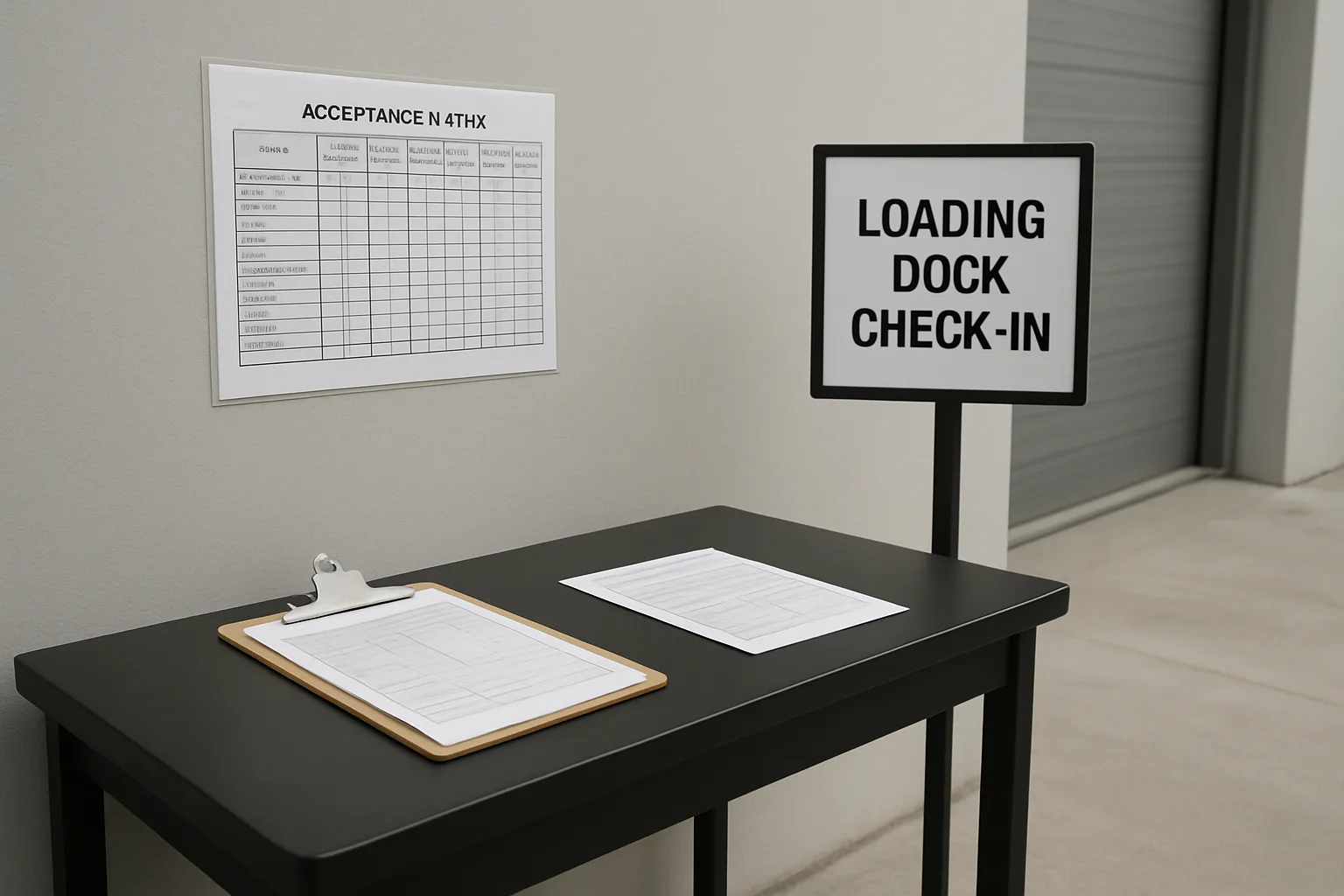
Step 3: Staging rules (dock zones, tagging, and time-limited holds)
Once you accept an item, you need a controlled place to put it—without turning the lobby into a storage unit.
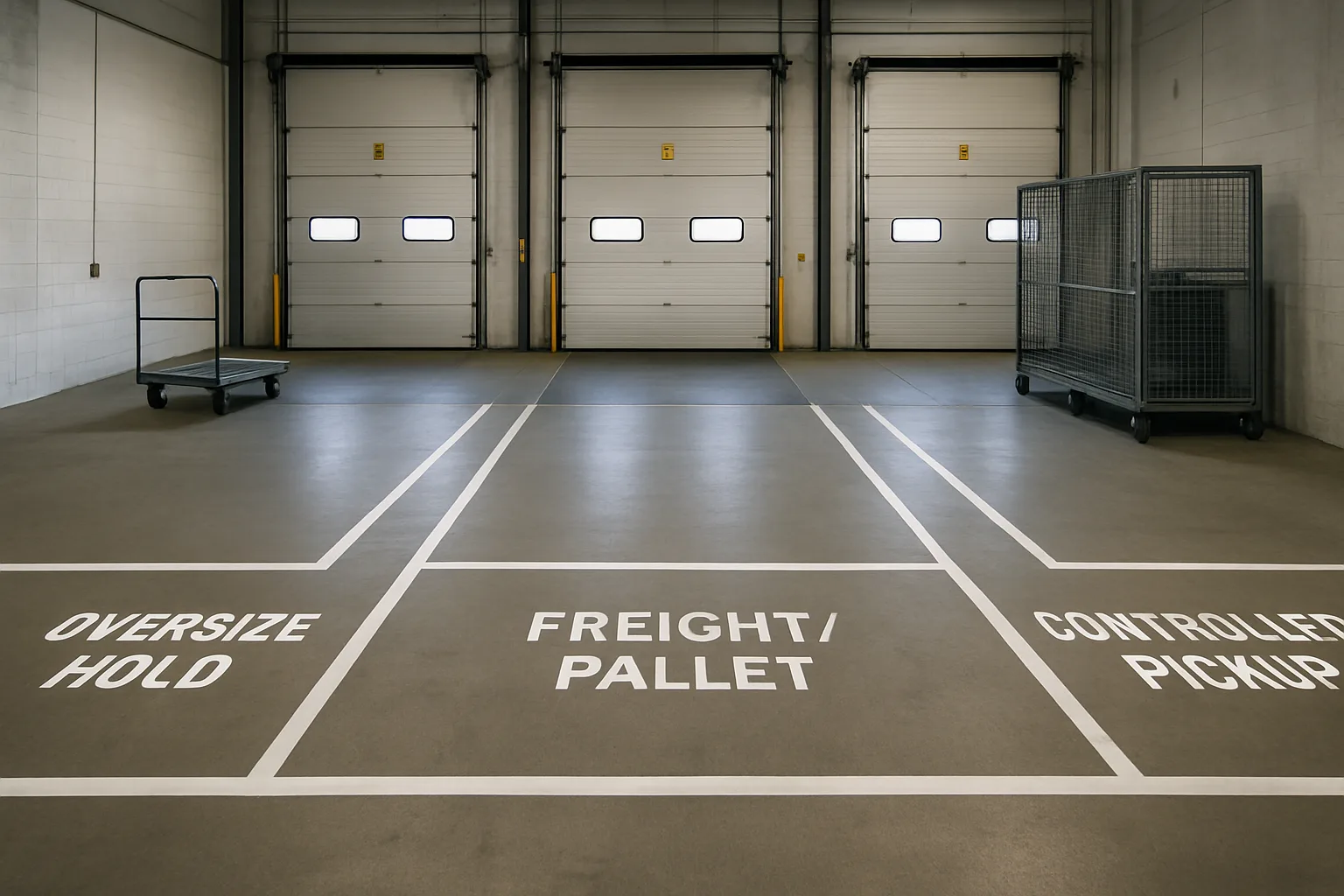
Create temporary dock zones
- Zone A: “Oversize hold” (boxed furniture/appliances) with clear floor tape boundaries.
- Zone B: “Freight/pallet” for LTL shipments—no blocking egress, sprinklers, or electrical panels.
- Zone C: “Controlled pickup” (locked cage/room) for high-liability items awaiting verified handoff.
Tagging: make every item unmissable
Use a consistent tag format regardless of where it’s staged:
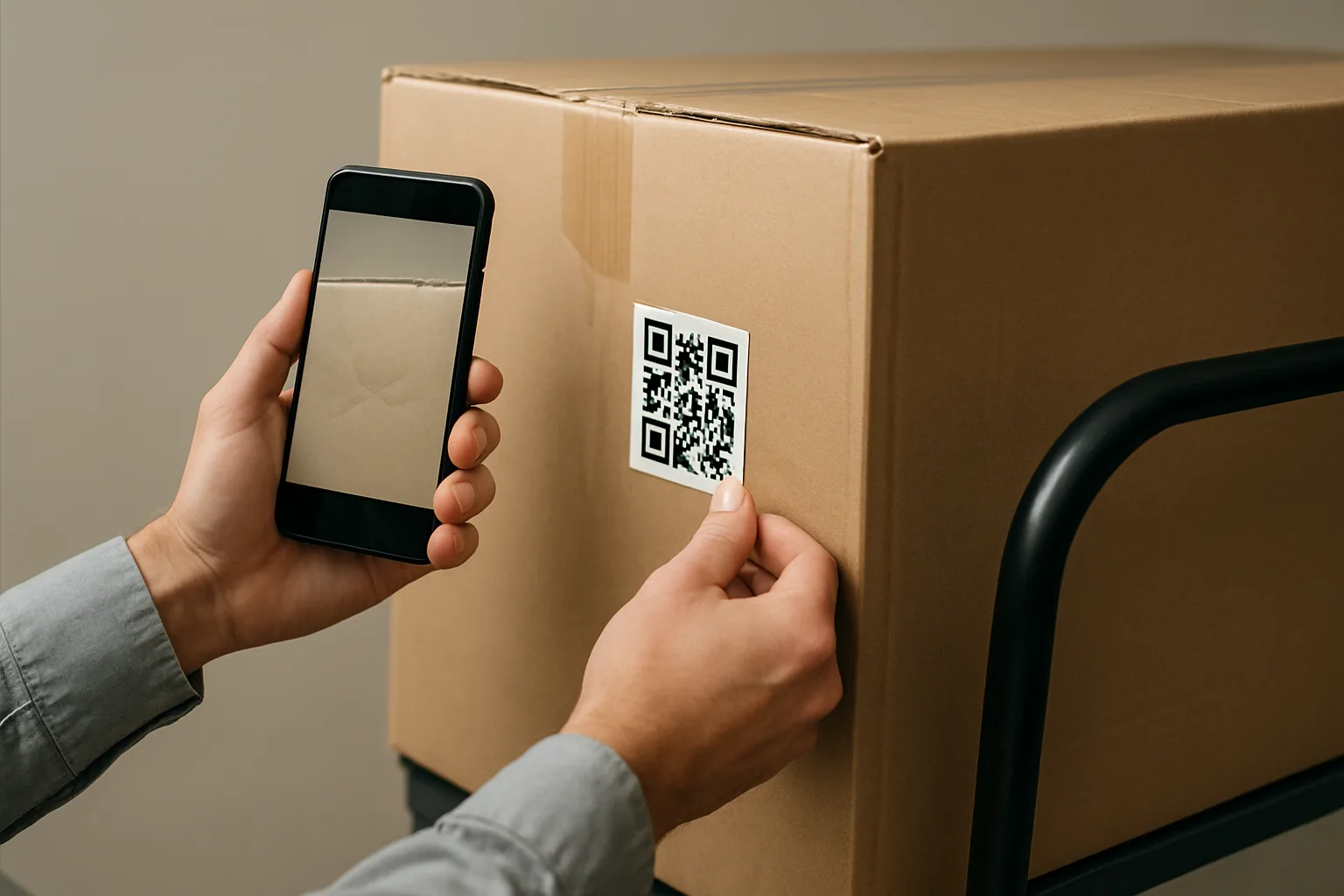
- QR label (TrackNest or your logging tool) linked to unit, resident, and delivery type.
- Large-print slip: Unit + resident last name + date/time + “Dock Zone A/B/C.”
- Handling notes: “Keep upright,” “Do not stack,” “Fragile glass.”
Time-limited holds (so the dock doesn’t become permanent storage)
Set and publish hold limits by category:
- Oversize: 24–48 hours before escalation (resident notice + potential return/reschedule).
- Freight: “No hold” unless pre-approved; aim for direct-to-unit or same-day pickup.
- Controlled: Shortest possible window; locked storage; release only with verification.
Step 4 & 5: Proof-of-condition + handoff verification (reduce disputes and tighten chain of custody)
Proof-of-condition: what to capture in under 60 seconds
- Exterior photos: all sides plus close-ups of dents/tears/wet spots.
- Label photo: carrier tracking label and any “signature/ID required” markings.
- Condition note: “Box crushed corner,” “strap broken,” “shrink wrap torn,” “pallet leaning.”
- Driver note: if the driver acknowledges damage, record “Driver notified” and name (if offered).
Log these against the item record so you can answer, later, “What did we receive and in what condition?” without guessing.
Handoff verification options (choose based on risk)
- Low risk: Resident pickup with release note (“Left with resident at desk/dock”).
- Medium risk: Resident signature on a building release screen/paper + photo of item at handoff.
- High risk / controlled: ID check + recipient signature + time-stamped handoff note; no proxies unless pre-authorized in writing.
Example playbooks (use or adapt)
Example A: Boxed sofa delivered midday
- Classify: Oversize → Dock Zone A.
- Accept: Building receipt only (no resident signature); refuse if box is punctured.
- Stage: Tag with QR + unit; 48-hour hold max.
- Condition: 4 photos + note “minor corner crush.”
- Handoff: Resident signature at pickup; release note logged.
Example B: Alcohol delivery marked “Adult Signature Required”
- Classify: Controlled.
- Accept: Recipient must be present with ID; otherwise refuse and ask carrier to reattempt.
- Stage: If accepted (recipient present), no staging—handoff immediately with verification.
- Handoff: ID check + recipient signature; log “verified adult signature.”
Example C: Palletized appliance freight arrives without appointment
- Classify: Freight.
- Accept: Refuse without a dock window or without resident/installer present.
- Reason: Freight dwell time creates safety and access issues; chain-of-custody is unclear.
FAQs
- What should an oversized package delivery apartment policy include?
-
At minimum: classification categories, who can sign (and who cannot), where oversize/freight is staged, maximum hold times, documentation requirements (photos/notes), and handoff verification rules.
- Can the front desk sign for signature-required packages?
-
Only if your policy explicitly allows it and the carrier’s requirement permits an agent signature. For adult signature, ID-required, or controlled items, require the named recipient to be present—otherwise refuse and request reattempt.
- How do we handle furniture delivery when residents aren’t home?
-
Default to dock appointment windows and direct-to-unit delivery. If you allow staging, cap the hold time (24–48 hours), require clear tagging/QR logging, and document condition on arrival.
- What’s the safest approach to freight delivery in an apartment building?
-
Require scheduled dock windows, confirm equipment needs (lift gate, pallet jack), designate a pallet zone that doesn’t block egress, and avoid “we’ll store it until they come” unless you have secure capacity and documented chain-of-custody.
- How do photos actually help with damage disputes?
-
Time-stamped intake photos and notes show whether damage was visible at receipt, whether packaging was compromised, and who handled the item. That clarity reduces back-and-forth with residents, carriers, and vendors.
- What if we don’t have a loading dock?
-
Create a “micro-dock” zone: a designated service entry area or secured room near freight access. Use the same rules—separate lane, time-limited holds, and verified handoff—so oversize items don’t migrate to the lobby.
CTA: Make the “parallel lane” auditable (even when storage is off-shelf)
Oversize and high-liability deliveries fail when they’re handled informally: no consistent routing, no condition notes, and no reliable proof of who picked up what.
TrackNest can act as the logging and verification layer for this parallel process—QR labels for off-shelf items, time-stamped intake notes/photos, and documented handoff steps—so your team can run the dock like a controlled intake point instead of an overflow closet.
Conclusion
The front desk is optimized for speed and service, not storage and liability. By defining (1) classification rules, (2) acceptance authority, (3) dock staging zones with time limits, (4) proof-of-condition capture, and (5) handoff verification, you prevent lobby pileups and reduce disputes—without needing to redesign your entire package room.
When in doubt, route non-standard deliveries to a controlled dock workflow and make every step visible, repeatable, and documented.