

A conference package can arrive before the person named on the label, belong to an exhibitor rather than a hotel guest, and need to reach a meeting room that changes during setup. Treating every delivery as an ordinary room-number pickup leaves important decisions unstated. The useful question is not simply “Has it arrived?” It is “Which physical pieces are in our custody, for which event, and who can direct their next move?”
This guide is an operational planning framework for ordinary parcels accepted by a hotel or its designated receiving provider. It does not replace the venue’s shipping instructions, event contract, carrier rules or specialist freight arrangements. Confirm those first. Pallets, unusual contents and restricted goods need the appropriate receiving specialist, not an improvised front-desk exception.
1. Identify the receiving owner before giving an address
Ask whether the hotel desk, loading dock, event-services department or an on-site shipping operator owns receipt. FedEx Office’s hotel and convention services illustrates why the answer can include a separate on-property operator. Its services are available at participating venues; do not assume a particular hotel uses them or that TrackNest connects to them.
Put the confirmed receiving contact, permitted arrival window, address format and internal escalation contact in one event instruction sheet. If two departments receive parcels, define how each alerts the other. The event planner should know where to ask for a physical receipt check, rather than forwarding every tracking email to the concierge.

2. Build an expected list without pretending it is inventory
Use the pre-arrival manifest guide to collect event identity, an on-site contact and expected pieces. Keep that list separate from the count of parcels physically received. Ask the organizer to communicate revised counts; adding a vendor late can change the expected total without changing anything on the shelf.
- Assign one event reference that survives changes to a ballroom or meeting-room name.
- Record individual tracking references when supplied, without guessing missing ones.
- Identify who can authorize a release or redirect and how staff will verify a change.
- Agree what the team should do with shipments arriving before or after the approved window.
3. Count the actual pieces at receipt
Match each physical package to its own record before assigning it to the event. The multi-box reconciliation guide explains how to distinguish a missing piece from an unverified expectation. If a carrier says a shipment is delivered but staff have found only two of three cartons, record those two and leave the third unresolved. Do not manufacture a receiving timestamp to make the totals agree.
AI label scanning can assist data entry, but staff still need to compare the captured name, address and tracking detail with the label. TrackNest offers AI label scanning; this is not a promise of perfect recognition, carrier integration or automatic event matching.

4. Record internal delivery as a separate handoff
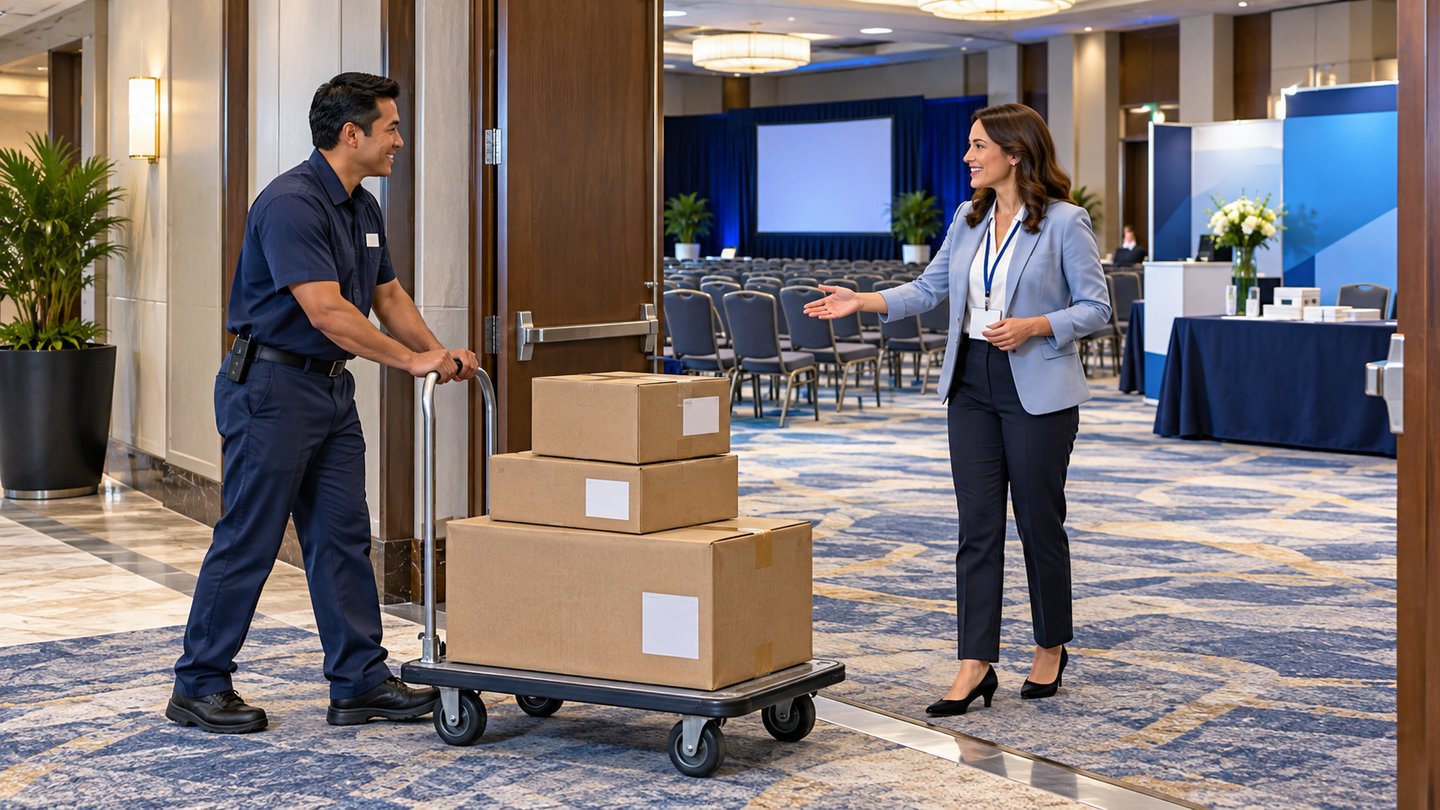
Moving cartons to a ballroom is different from releasing them to an authorized exhibitor. Name the receiving person and confirm the meeting space is ready before sending a cart. Use the meeting-room handoff process to record the pieces moved, destination, mover and outcome. If the room is unattended, follow the agreed secure-delivery rule instead of assuming that reaching the doorway completes the job.
For covered U.S. workplaces, OSHA’s exit-route requirements prohibit obstructing exit routes, including with temporary materials. An event deadline does not turn an exit into an overflow storage area. Use approved storage and handling arrangements appropriate to the cartons.
5. Give exceptions an owner and a next check
An unclear recipient, a room change and an event that has already ended are different problems. The event package exception guide separates them. Record what is confirmed, what is unknown, who will resolve it and when staff should check again. Avoid vague entries such as “sales handling” when the next shift does not know which person was contacted.
6. Close the event, not just the meeting room
Before removing the event from the active list, reconcile packages still held, released to participants and awaiting outbound collection. The outbound closeout checklist distinguishes ready-to-ship cartons from parcels actually accepted by a carrier. Leftover materials are not automatically abandoned property, and an organizer’s departure is not authorization to dispose of them.

Use software around the decisions your team has agreed
TrackNest provides package tracking alongside lost-and-found and luggage check-in/out. Discuss how your current event-receiving steps would fit during a TrackNest demo. This article recommends a workflow; it does not assert dedicated event manifests, bulk import, automatic routing or shipping integrations are product features.