

“Three boxes delivered” can mean a sender expected three, a carrier tracking page lists a shipment as delivered, or receiving staff physically counted three. Those statements are not interchangeable. At a conference hotel, the difference matters when an exhibitor asks for all of their materials shortly before a session begins.
Use this procedure for ordinary multi-piece event parcels after the advance manifest is available. It is one part of the conference receiving workflow, not a carrier claims process or a guarantee that a missing carton can be found.
Maintain three separate counts
- Expected: the latest count confirmed by the sender or event contact.
- Received: distinct physical pieces accepted into the property’s custody.
- Released: pieces handed to the authorized recipient or recorded receiving team.
For day-to-day reconciliation, the held count is received minus released, adjusted only for separately documented events such as an authorized return. Do not subtract a planned delivery that has not happened. If the system uses different status names, keep the underlying distinctions in the record or approved companion log.

Give every physical piece a distinguishable record
Record the carrier tracking identifier when present and the property’s own reference if used. A sender’s “box 1 of 3” notation can help group the set, but it is not a substitute for checking each piece. Two cartons may carry similar labels, or one may arrive under a replacement label. Avoid assuming that a repeated event name means a duplicate parcel.
When capturing a label, compare the important fields to the physical carton. Keep the original tracking reference distinguishable from the event reference. If staff correct a transcription error, record the correction according to the property’s process instead of deleting evidence of an unresolved matching issue.

Work through a partial arrival
Consider a fictional training example: the organizer expects three cartons. Two distinct cartons arrive at 10:15, and a third tracking reference is still being checked. The record should show expected three, received two, released zero and held two. The unresolved item remains an expectation, not a carton assigned to an empty shelf.
At 11:00, the authorized exhibitor collects one of the received cartons. Now the record shows received two, released one and held one; the third expected carton is still unresolved. If that final carton arrives later, record its actual arrival time and identifier. A batch-level “delivered” checkbox would hide all of these useful differences.
Investigate a count difference in a consistent order
- Recount the held pieces and confirm the individual identifiers.
- Check whether another shift or receiving point already logged a piece.
- Review documented releases and internal moves before assuming loss.
- Ask the sender whether the expected count changed or a shipment was split.
- Route any carrier inquiry to the authorized shipment owner and keep its status separate from hotel custody.
Describe visible facts: “two cartons located in receiving; third reference not matched” is clearer than “carrier lost one.” Do not assign fault from an incomplete tracking view. If a package is damaged or its label cannot be matched safely, use the event exception process and the property’s approved handling instructions.
Reconcile before an internal delivery
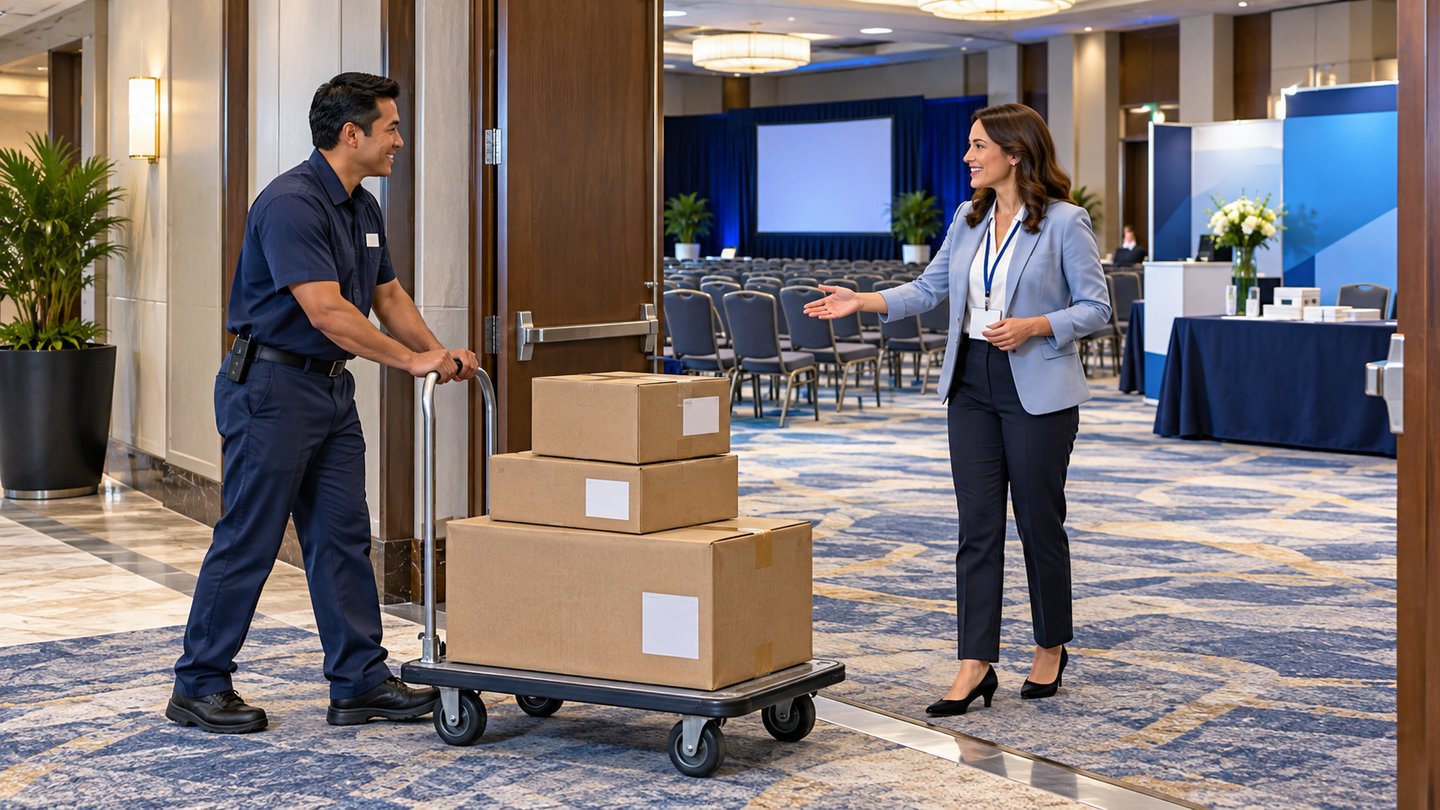
Use a movement list for the particular cartons going to the meeting room. Count the pieces loaded, identify their references and have the receiving person check the same set. A total alone is weak evidence when two exhibitors each have three similarly sized cartons. The meeting-room handoff guide addresses destination changes and unsuccessful deliveries.
For covered workplaces, OSHA requires exit routes to remain unobstructed. Do not assemble a reconciliation pile in an exit while looking for a missing label. Use an approved work area and return checked pieces to their recorded locations.

Close with an explicit explanation
A final discrepancy can be resolved by evidence that the sender shipped fewer pieces, a missing carton arrived, or a documented release was previously overlooked. State which explanation applies and who confirmed it. If none is established, leave the issue open with an owner and next check. TrackNest package records can support organized intake and pickup notes; the counting method here is an operational recommendation rather than a claim of an automatic reconciliation feature.