

Reception receives a request to hold a parcel just after a colleague has taken it upstairs. A resident now wants desk pickup, or a planned helper is no longer supposed to receive it. The change is easy to write down and harder to carry out: the parcel, the instruction and the delivering staff member are in different places.
This guide focuses on mid-route changes within the changed package pickup plan workflow. It proposes procedures for ordinary parcels only. Medication, urgent and restricted deliveries require separate handling. A delivery change never grants room-entry permission or settles a question of legal authority; follow the community’s independent access and specialist procedures.
Establish the last confirmed physical event
Before promising to stop delivery, check which parcel is involved, who took it from reception and whether the handoff has already happened. Use the package reference, not just a resident surname, when several parcels are on the same round.
A dispatch entry proves only that the parcel left its earlier location. An unread message to a colleague proves only that staff attempted contact. Neither establishes that the item is still on the cart. Ask the person currently responsible for the round to confirm the physical situation.

Contact the person carrying the parcel
Use the community’s approved internal channel and communicate the operational request without unnecessary personal details. Identify the parcel and ask the colleague to confirm whether it remains in their custody. If it does, coordinate the permitted hold or return while the changed instruction is verified.
- Which exact parcel is affected?
- Has it been handed over already?
- If not, who currently has it and where?
- Has the delivering colleague acknowledged the change?
- What secure location will hold it next?
If contact fails, follow the supervisor’s escalation procedure. Tell the resident that staff are checking the delivery’s status rather than guaranteeing that it has stopped. Give the next shift the unresolved question and its owner if the check crosses a handover.

Choose the next action from the confirmed outcome
The parcel remains with staff
Confirm the requested change using the community’s established process. If room delivery is canceled, return the item to the agreed secure location and record the actual return. If a new receiving point is requested, verify it before redirecting the colleague. Avoid creating an unattended drop location simply because the original plan changed.
The resident already received it
Preserve the actual receiving outcome and tell the responsible desk colleague that the attempted change arrived after completion. If the resident now wants further assistance, treat that as a new request. Do not reverse the completed package record merely to make it match the later instruction.
A helper already received it
Record the collector and completed handoff accurately under policy. A later instruction cannot undo that event in the record. Refer any concern or requested follow-up through the community’s approved process rather than promising that staff can retrieve the item. The helper mismatch guide covers unclear collector scope.

Confirm the resident’s revised preference clearly
A change to today’s delivery might leave the usual preference untouched. Ask whether the resident wants a one-time hold or a different arrangement going forward. The pickup preferences guide helps separate carrying assistance, delivery location and helper collection.
Department of Justice effective communication guidance explains that effective communication depends on the person and context. Provide an appropriate way to confirm the revised choice. Do not treat a noisy phone call or difficulty using a screen as evidence that someone else should choose the receiving arrangement.
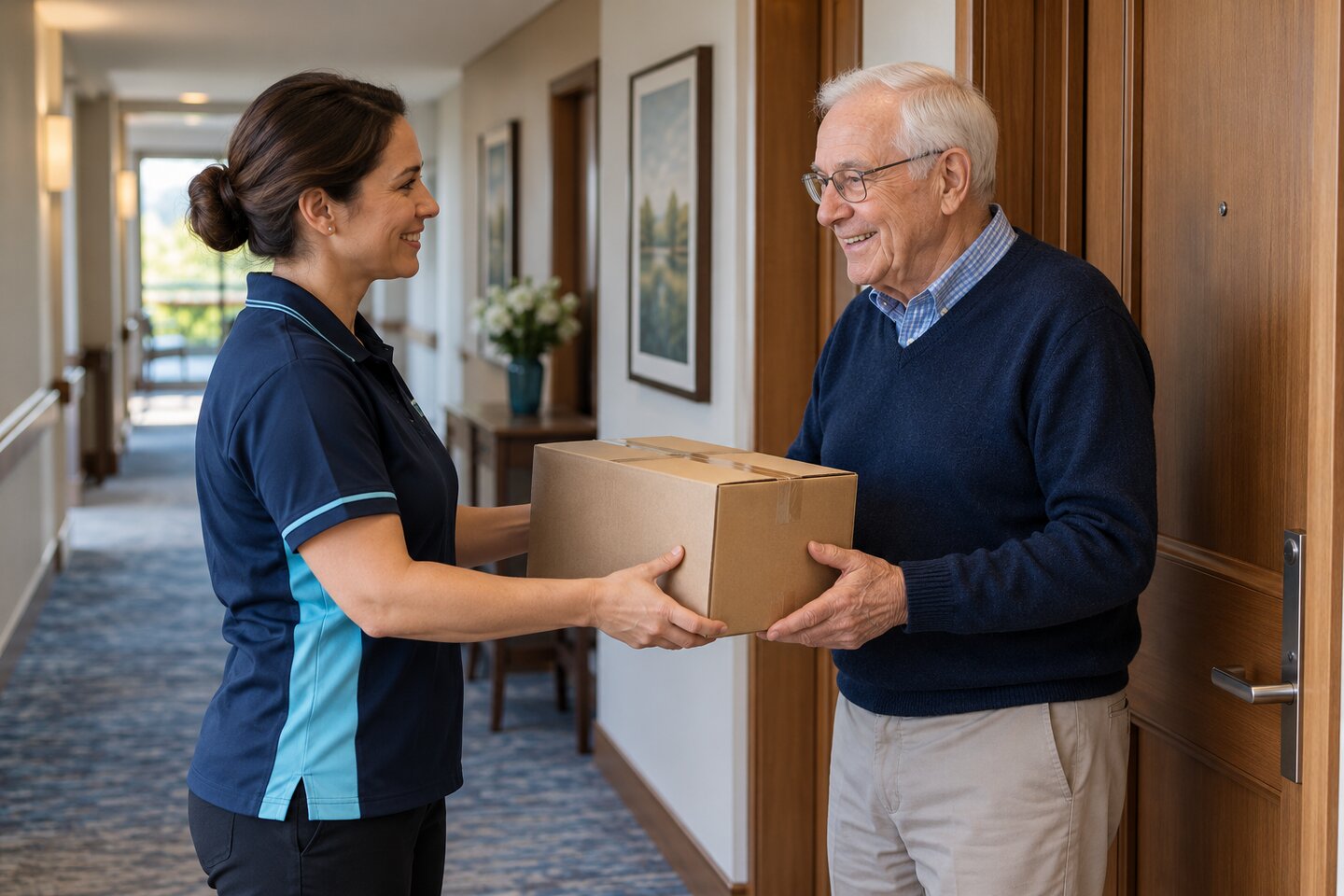
Reconcile the desk record and the delivery-round record
When the parcel returns, confirm its physical presence and current location. Resolve the old delivery instruction on the working round sheet so another colleague does not repeat it. Record whether another delivery attempt, desk pickup or clarification is now expected, and assign the next action.
FTC guidance on protecting personal information recommends limiting retained information to the legitimate need. The sequence of request, contact and outcome is useful; personal reasons for cancellation usually are not. Keep notes factual and use the approved retention process for superseded instructions.
Test interrupted delivery before relying on software
TrackNest provides package tracking and AI label scanning, but this guide does not assert live staff locations, route cancellation, automatic acknowledgments or change notifications. In a demo, walk through a parcel already on a cart when the resident changes the plan. Confirm supported recording steps and assign the human contact and physical reconciliation checks explicitly.